Dental office decoration: creating a soothing atmosphere without sacrificing functionality
In a dental office, decoration is not just a matter of aesthetics. It influences the patient experience, trust, the perception of service quality, and even the way waiting time is experienced. Today, decor trends align with a clear goal: creating a relaxing atmosphere in a healthcare setting while respecting medical requirements.
This article helps you make the right choices in layout and interior design for your dental office, whether you are a large dental clinic or a small dental center.
1) Reception and waiting room: first impression, first role
The first area the patient sees is often the reception. This stage of the visit must be reassuring. A functional space and welcoming decoration have an immediate effect on stress.
Soft colors and natural light
Soft colors and soothing colors (beige, sand, sage green, grayish blue) are popular because they create a calming ambiance. White remains a classic in dentistry, but paired with a wood tone or a more natural palette to avoid an overly "office-like" feel.
If possible, highlight natural light. Otherwise, opt for soft lighting: several light points, warm temperatures, and indirect light near an accent wall.
Functional furniture and patient comfort
A waiting room's decor also relies on functional furniture: easy-to-clean seating, fluid circulation, a discreet children's corner, and closed storage. The goal is to ensure patient comfort without hindering organization or flow management.
2) Modern design and space organization: office design in the service of care
A well-planned dental office is a compromise between modern design and care constraints. Having a functional layout becomes the primary objective: avoid "fragile" decor in favor of an interior that is durable, functional, and coherent in the choice of materials.
The dental chair as a focal point
In the treatment room, the dental chair is the main element. Everything else must support the healthcare professional's posture and the efficiency of the workflow: accessible storage, clear work surfaces, resistant coverings, and visual consistency with the rest of the office.
Decoration materials: durable, clean, reassuring
Materials influence the visual result and the perception of hygiene. Trending decoration materials include:
-
natural wood (or high-resistance imitation)
- laminates and non-porous surfaces easy to disinfect
- technical textiles for acoustic curtains (if compatible with the protocol)
- sober accessories, easy to maintain
The right choice of materials is a practical solution: it improves maintenance, longevity, and the office's image.
3) Wall decoration and dental art: a unique and professional decor
Wall decoration is one of the quickest ways to create an identity. A decor for a dental office can be unique without being too cluttered.
Decorative paintings and art
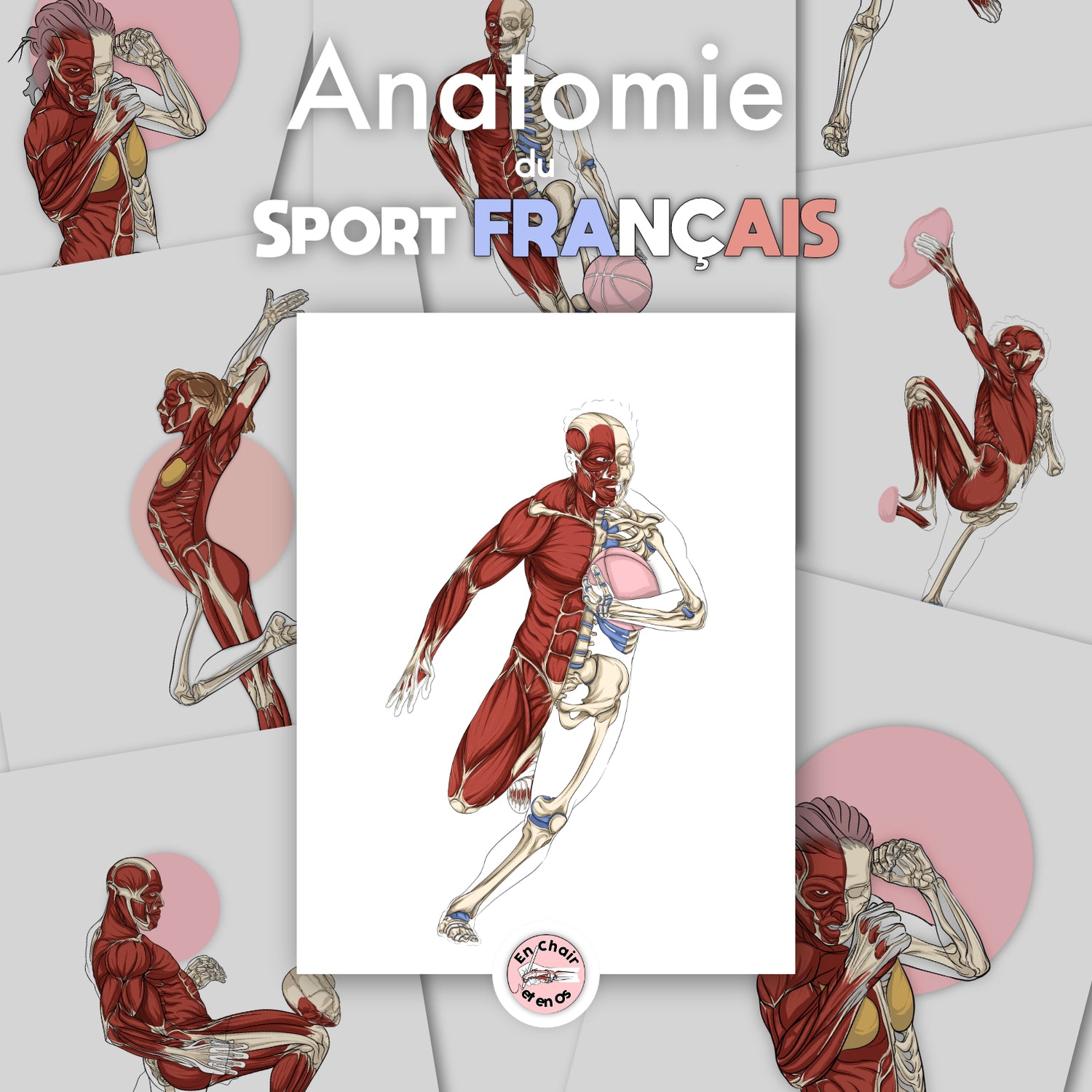
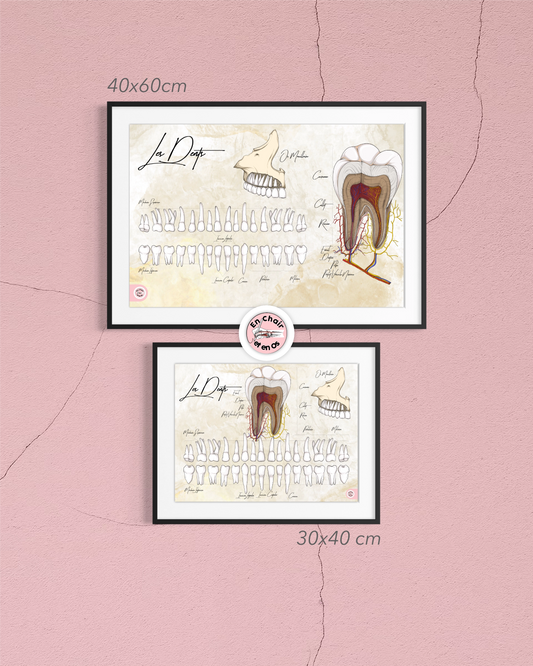
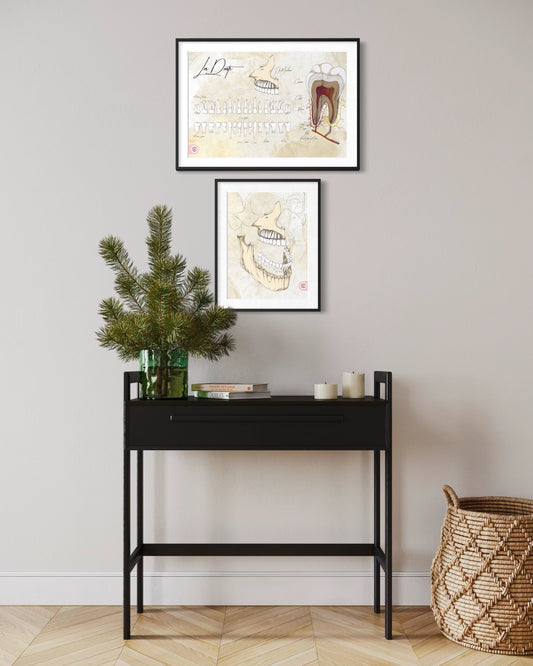
Decorative paintings work very well: abstract, landscapes, minimalist illustrations, or even anatomical plates representing dental art. A few well-chosen pieces are better than an accumulation of decorative elements.
For a coherent result, choose a visual category: modern lines, natural colors, or a series of coordinated works. The watchword: consistency.
4) Decorative plants: natural, soothing, but controlled
Decorative plants bring a natural touch and a soothing atmosphere. They improve the perception of comfort and make the space feel less "tech-heavy."
Practical advice:
- favor easy-care plants (zamioculcas, sansevieria) or preserved plants
- avoid allergenic plants
- a well-placed plant in the reception or waiting room can transform the ambiance
5) Tech, confidentiality, and office policy: design in the service of trust
Successful decoration must respect the office's policy, legal obligations, and the right to confidentiality. The information displayed must be clear, but not invasive.
Reserved space and patient journey
Create a small reserved space for sensitive discussions (quotes, questions, treatment preferences, orthodontics, endodontics). This builds trust.
Technology and experience
Technology can improve the experience: discreet screens, appointment booking systems, display of educational oral health information (bucco), or prevention demonstrations. It is an advantage, provided you don't turn the room into a showroom.
6) Decoration inspiration and content: from "seeing" to a real project
Many people start with a decoration idea found on Pinterest or an inspiration platform; this is useful, but the challenge is moving from the image to an actual layout plan.
To avoid mistakes:
- list your needs (flow, storage, hygiene, confidentiality)
- define a palette (color, tone, materials)
- keep a logic of maintenance and durability
7) Product, price, ordering: think like a client, act like a pro
Good habits:
- buy less, but better, for key pieces (lighting, seating, artwork)
- check maintenance / disinfection compatibility
- favor robust finishes for sustainable interior decoration
A good partner (medical furniture, interior design agency, or craftsman) helps create a coherent, and sometimes personalized, custom look.
Conclusion: a useful, reassuring, and modern dental office decoration
Modern dental office decoration does not pit beauty against technique. It seeks a balance between interior design, comfort, hygiene, and efficiency. With soothing colors, adapted furniture, a few decorative paintings, decorative plants, and good space organization, you can create a genuine identity, strengthen trust, and improve the experience, from the very first minute.
Whether your office wants a "modern center" or "calm salon" vibe, the principle remains the same: functional design, sustainable materials, and a soothing atmosphere in the service of care.