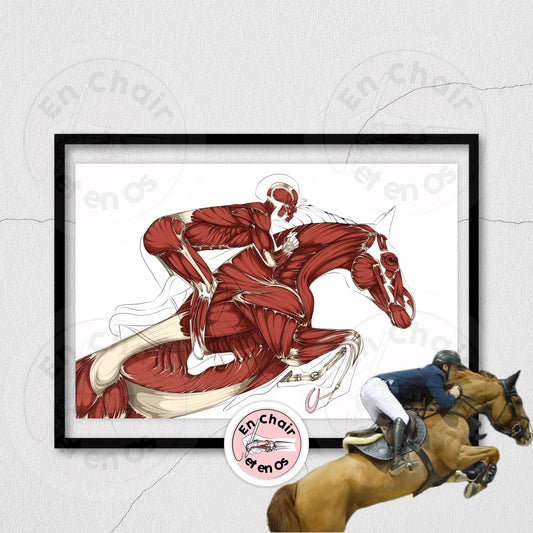
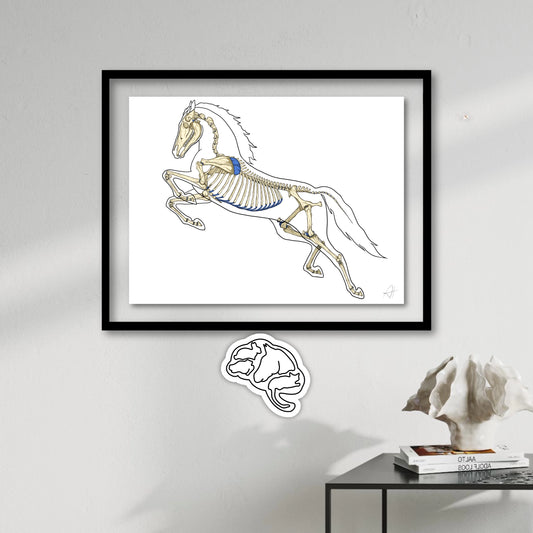
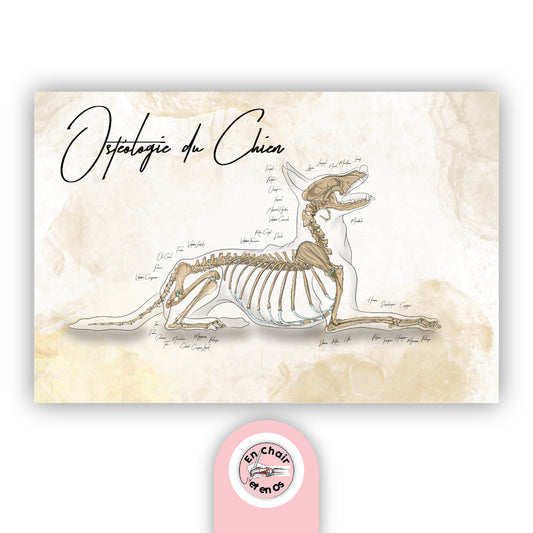
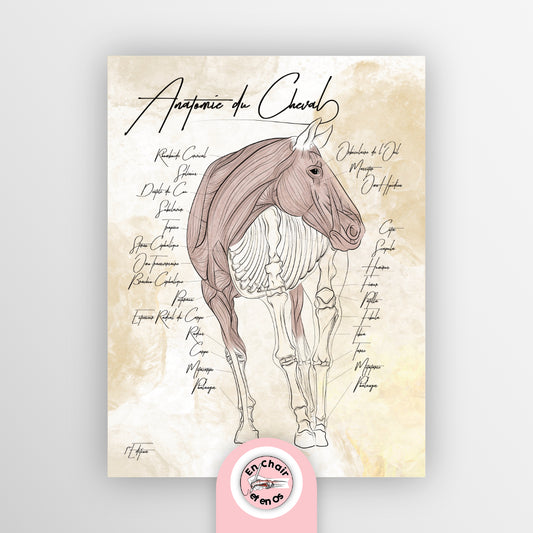
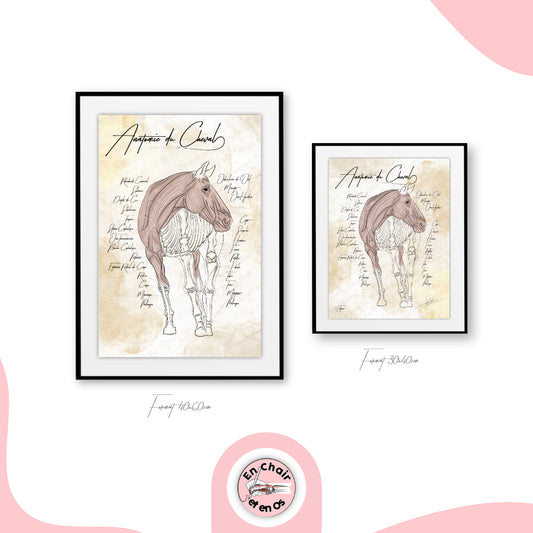
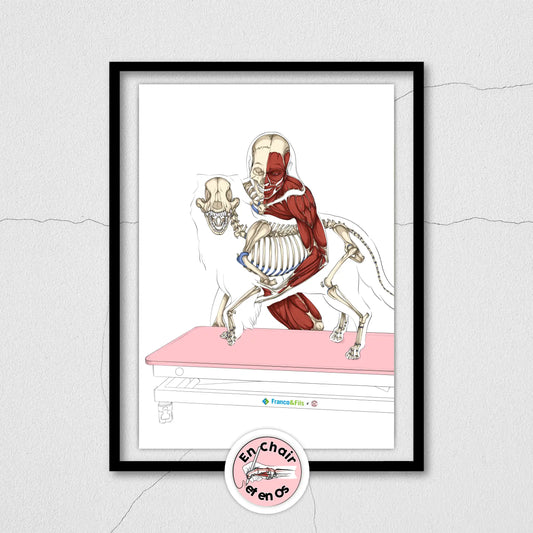
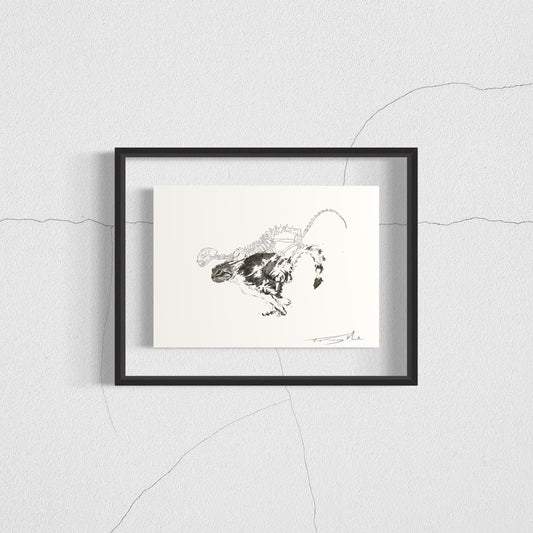
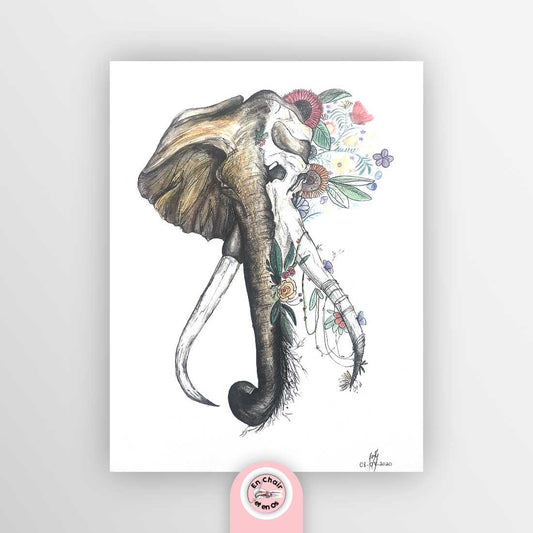
Animal anatomical charts are essential tools for veterinary medicine, education, or simply for animal lovers. These visual aids allow for precise visualization of anatomy, offering a better understanding of the structures of the animal world. Whether you are a veterinarian, student, veterinary nurse, AVN, or animal health practitioner, animal anatomy charts represent a first-class educational and decorative resource.
Main uses:
-
Teaching animal anatomy to students
-
Professional decoration and artistic memento
-
Revision for exams and competitions
-
Help with raising awareness among adult audiences
What is an animal anatomical chart?
An anatomical chart is a faithful representation of an animal's internal and external structures, stemming from a long tradition dating back to the zoological work of Messrs. Edmond Perrier and Henri Gervais (Allée Charles Darwin). This scientific illustration combines anatomical precision with detailed design, used by both medical health professionals and enthusiasts alike. Each item is an educational key to understanding human and animal anatomy.
The different types of anatomical charts
The market and our online shop offer a varied collection depending on the systems represented. See the complete category on our website:
Each product presents exceptional anatomical detail of tissues, organic materials, and complex structures.
The animals represented
Domestic animals (dog, cat, horses):
Livestock and exotic pets (NAC):
Rabbits, mice, and rodents (pet mammals) benefit from specialized charts. Reptiles and birds complete our range.
Wild animals:
Exotic species (rare mammals) for zoos and enthusiasts.
Who are these charts for?
-
Veterinarians in practice
-
Students and nurses in veterinary medicine
- AVNs (Animal Veterinary Nurses) of the medical order
- Animal osteopaths
- Animal world enthusiasts
For veterinary professionals
Anatomical charts play an essential role in consultations to educate owners. This simple visual communication technique transforms the experience and strengthens trust. These aids help explain pathologies and treatments, enhancing the medical service provided.
For students
The anatomical charts are the best revision tool for students, offering superior visual memorization. Each poster details organs, muscles, and structures with precision.
Effective revision strategy:
- Consult daily (ISBN reference for supplementary works)
- Self-assess by covering the legends
- Combine 2D charts and 3D anatomical models (dog models, horse models, molded models)
- Use the site and applications: Anatomy Ninja Upper Limb and Anatomy Ninja Lower Limb
- Study cross-sections and sectional views
How to use anatomical charts?
In veterinary consultation
In the clinic, the chart becomes an essential communication tool. The practitioner can point to the animal's body part on the chart rather than using its scientific name to explain. This simple technique reassures the client and enhances the professional service.
Concrete example: For a canine pathology, point directly to the organ concerned on the dog anatomy chart, then indicate the treatment zones.
For learning and revision
Students develop memorization techniques based on our charts. The most effective method combines:
- Reading theoretical courses (comparative human anatomy manual)
- Observing the charts
- Handling 3D molded models
- Self-assessment on the site or apps
- Final verification on the chart
This approach guarantees better retention of anatomical data.
For professional decoration
Framed anatomical charts create a perfect professional atmosphere in clinics while educating clients. Each anatomical motif becomes a work of art and a memorable memento.
Installation tips:
- Place at eye level (1.60m)
- Indirect lighting
- Neutral frames
- Group by theme for coherent information
The advantages for professionals
Measurable benefits:
- Improved communication (+40% understanding)
- Optimized time
- Strengthened company image
- Permanent educational material
Effective educational support
For learning, charts surpass textual descriptions. The brain processes images 60,000 times faster than text. Humans retain 80% of what they see, so anatomical posters or illustrations massively help with memorization.
Manufacturing of anatomical charts
The artisan manufacturing process combines scientific rigor and artistic expertise, referenced since the work of Edmond Perrier and Henri Gervais:
- In-depth anatomical research
-
Hand sketching and validation
- Final illustration
- Colorization and layout
- High-quality printing on certified materials
Each illustration created is a faithful reproduction ensuring exceptional detail.
Charts and animal osteopathy
Animal osteopathy requires ultra-detailed charts showing muscle insertions, connective tissues, and complex relationships between bones. An osteopath can well equip their clinic with posters of the dog, horse, or other pet.
FAQ
Can I order a poster of a rare animal?
Yes, we accept custom orders. Contact axel@en-chair-et-en-os.fr specifying the name of the species. Lead time: 3-8 weeks.
Are the charts suitable for children?
Absolutely. They develop curiosity in children and help with the understanding of human and animal anatomy.
Conclusion and recommendations
Animal anatomical charts represent an essential investment for any professional or enthusiast.
Our recommendations:
For students: Charts of common species (dog, cat, horses).
For veterinary clinics: Large-format charts perfect for each species. Possibility of a personalized anatomical mural - a unique memento for your business.
For schools: Complete collections including dog models, horse models, 3D molded models.
For enthusiasts: Chart of your favorite animal with an artistic motif. The ideal memento for your personal decor.
 Sold out