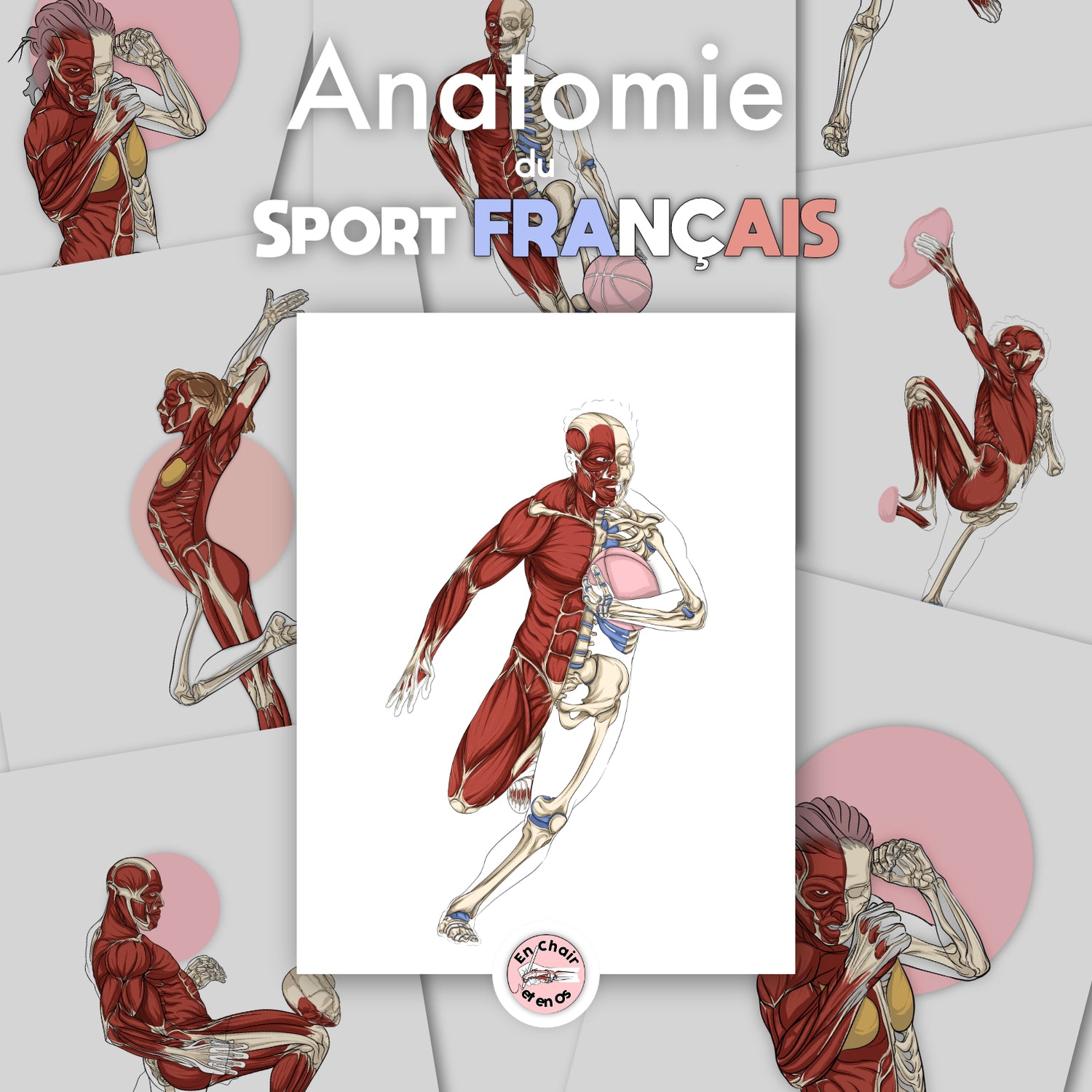
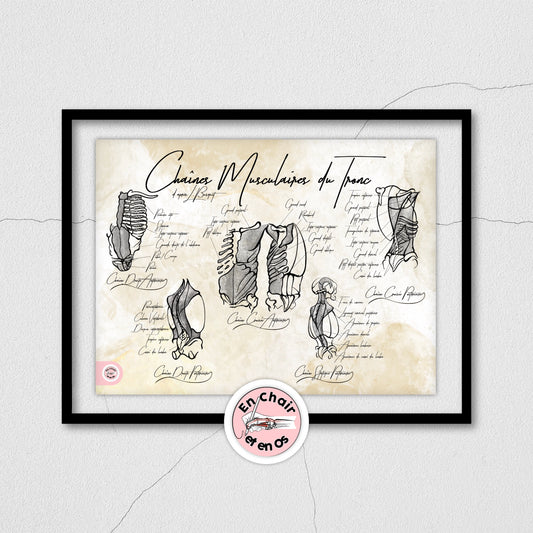
What is an anatomical chart of the bones?
The anatomical charts of the bones and the human skeleton are much more than simple decorative elements. Each creation constitutes an anatomical product with high educational, medical, and scientific value, designed for the study of bones, skeletal anatomy, and the understanding of the human structure. Used in medicine, osteopathy, training, or research, they are aimed at any person wishing to see, understand, and study the skeletal system in a clear and accurate way.
Whether it is a wall poster or a more detailed anatomical model, each chart offers a precise graphical representation of bone architecture, from the axial skeleton to the appendicular skeleton, from the pelvic cavity to the upper and lower limbs. From the skull to the spine, from the hand to the foot, from the eye to the ear, each illustration highlights the bones of the human body, their joints, their functions, and their evolution within the human species.
These visual aids allow you to study the structure, analyze types of bones, understand the links with the heart, muscles, and nerves, and go beyond theory thanks to a clear and detailed view. The terminology used respects current references in osteology, ensuring reliable information for clinical, educational, or scientific work.
Educational, medical, and scientific tools
Learning anatomy relies heavily on visualization. Anatomical charts facilitate the study of anatomy by providing a precise, measured, and accessible description, adapted just as well to a course, a quiz, a flashcard, or an interactive application for revision. They constitute an essential resource for students, teachers, health professionals, and training groups.
Used in a medical practice, rehabilitation center, or school, they facilitate communication with the client or patient by explaining a pathology, a function, or a stage of treatment. The osteopath, doctor, or educational advisor thus has a concrete, visual, and understandable support at their disposal.
Formats, materials, and mounting
Each anatomical chart is available in several formats: paper poster, laminated version for better protection, rigid support, or model for wall mounting. Some models are designed to lie flat, others for vertical wall presentation, depending on the desired function.
The quality of the material, the fineness of the detail, the fidelity of the representation, and the clarity of the legend make each chart an ideal support for long-term use. These products are designed for daily use in a practice, sports hall, classroom, or research space.
A complete offer on the En Chair et en Os website
On the En Chair et en Os site, every purchase is accompanied by a clear and secure experience. Each product displays:
-
its name and its reference,
-
an up-to-date stock indication,
-
a loading in progress or available status,
-
information on delivery costs,
-
simple and secure payment solutions.
The product can be purchased online, paid by card or other means, with or without a promotional code, depending on current offers. Whether for a new educational project, a renewal of equipment, or a first order, everything is designed to facilitate the choice, from the cart to the final click.
Support serving many projects
These anatomical charts are used in many contexts: medicine, osteopathy, sports, teaching, scientific research, or simple educational decoration. They accompany the evolution of teaching practices and integrate just as well into a classic training setup as into a modern and interactive approach.
They can serve as an example during a class, as a revision aid, or as a basis for discussion during group work. Their function goes beyond simple display: they actively participate in the understanding, memorization, and transmission of anatomical knowledge.
Conclusion
The anatomical charts of bones and the human skeleton are comprehensive, reliable, and durable tools. At the crossroads of scientific discipline, pedagogy, and medical practice, they offer a better understanding of human anatomy, bone structure, and their functions.
Whether used to study, teach, explain, or decorate, they represent a solution adapted to each project, use, and level of expertise. An anatomical chart is not just a poster: it is a true partner in work, in the service of knowledge, research, and the transmission of knowledge.

 Sold out