Written by: Naël El Kastani
The use of anatomical charts in medical practice is a valuable tool for improving patient engagement throughout their care journey. But how can these visual representations truly influence patient involvement?
-
Anatomical charts allow for a better understanding of anatomical structures and how they function.
-
They facilitate communication between healthcare professionals and patients, making explanations clearer and more accessible.
These visual elements, available on our website En Chair et En Os, play a crucial role in patient understanding, which can motivate them to actively engage in their treatment.💡
Understanding and visualizing body structures
Posters allow the patient to visualize their own body, which is essential for understanding the origin of their symptoms and the value of the proposed treatment. By viewing a detailed representation of bodily structures, the patient can more easily locate their problem and grasp the importance of care.
The role of the anatomy chart in becoming aware of physical ailments
Take the example of the Chart - The Spine and Pelvis – The Pelvic Girdle. This chart shows the structure of the vertebrae, pelvic joints, and human skeleton with precision. For a patient suffering from lower back pain or pelvic-related disorders, visualizing this chart makes it easier to grasp the interactions between bones, muscles, nerves, and tissues. It offers a solid visual foundation upon which the healthcare professional's explanations can be built.
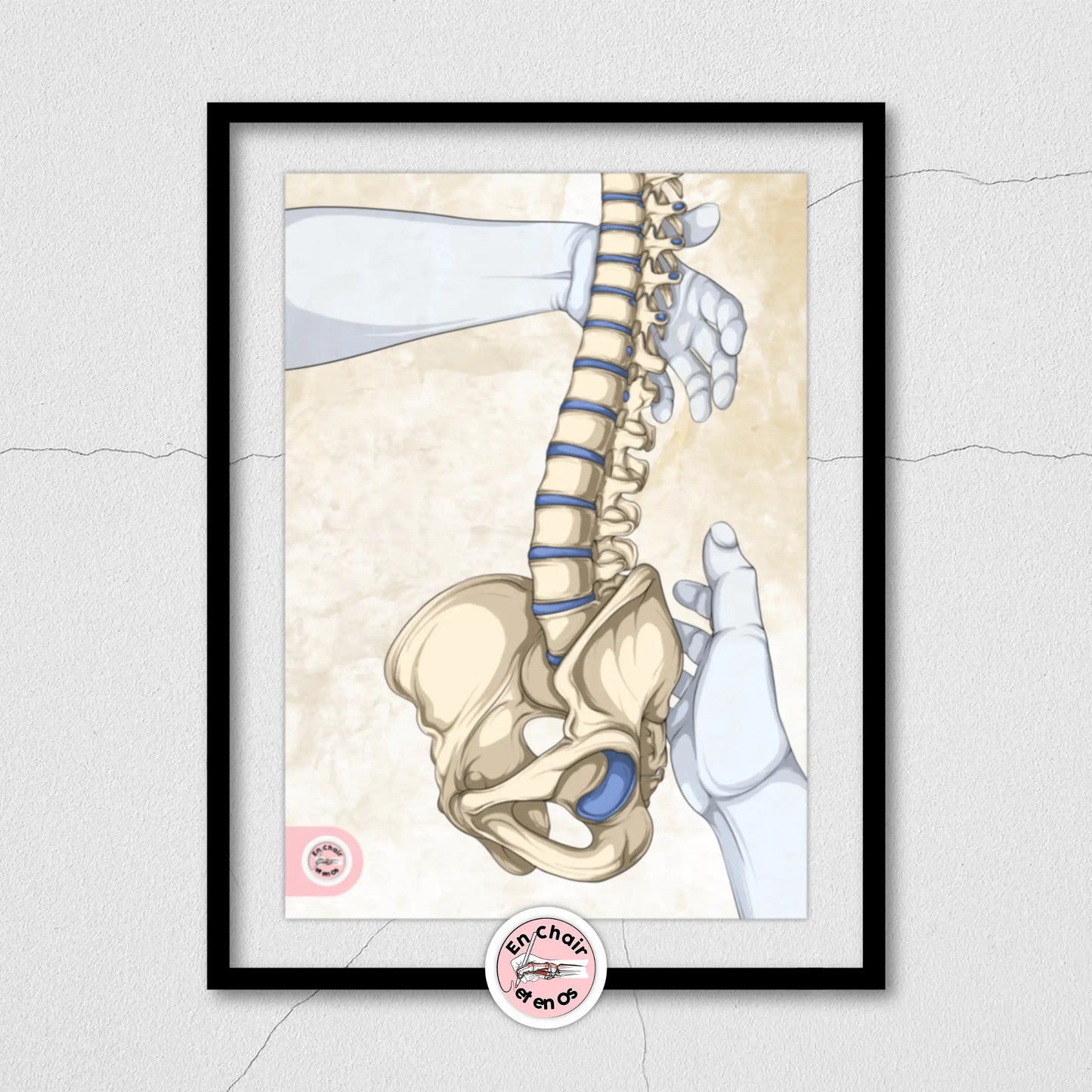
This facilitates an understanding of the root causes of pain and the importance of certain treatments, such as rehabilitation or postural correction. By realizing that certain actions or postures can aggravate their condition, the patient becomes more committed to following recommendations. The poster becomes a true pedagogical tool here, translating complex notions into clear and accessible visual representations.
But why is it so important to visualize these structures precisely? The answer is simple: without this visualization, how could the patient truly grasp the importance of their posture or the exercises being proposed? 💭
The impact of charts on patient education
Another effective way to engage the patient is to use human anatomy charts to explain the functions of the different parts of the human body. In this case, the Chart - The Spine, by showing the role of the spine in supporting the nervous system and providing mobility, allows the practitioner to help the patient better understand their body. Visual anatomical education engages the patient more, providing them with a better understanding of the importance of rehabilitating certain tissues or maintaining posture.
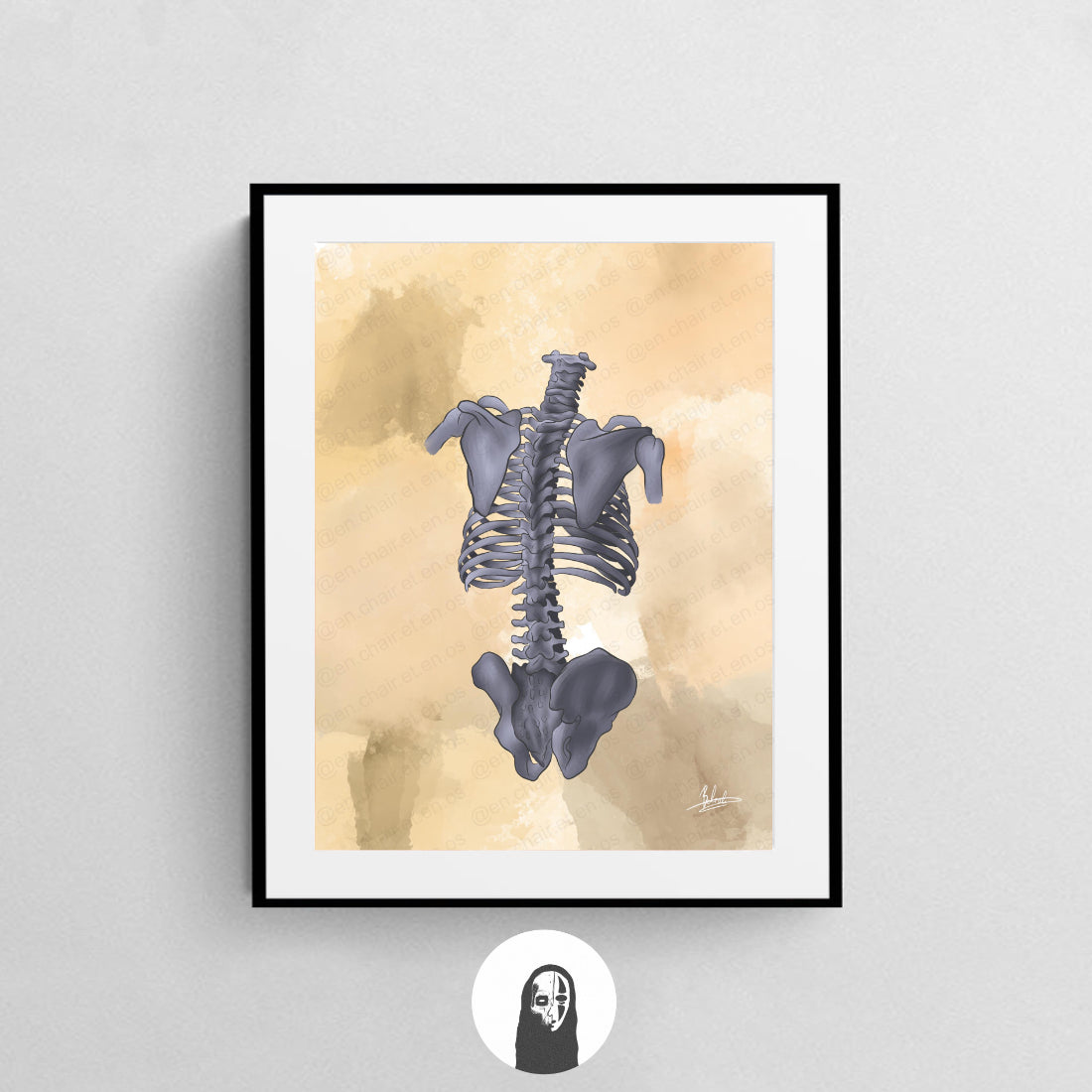
This type of approach, where the chart is associated with an explanation of internal mechanisms, can strengthen the bond between the patient and their own healing. Using clear and accessible illustrations promotes better reception of information by the patient, which has a direct impact on their adherence to the proposed treatment.
So, why not use such a tool? Isn't this a simple yet effective way to make the patient aware of the importance of their daily actions in their recovery? 🌟
Improving patient-practitioner communication
Another fundamental element for patient engagement is the right to quality communication between the healthcare professional and the patient. Illustrations facilitate this communication by making it possible to locate concepts that would otherwise be complex to explain verbally. 🗣️
Clarification of medical terms
Take the example of the Chart - Diaphragm Muscle Chains. This illustration clearly shows how the diaphragm is linked to the respiratory muscles and all the muscle chains of the trunk. Sometimes, patients may have difficulty grasping concepts like "muscle chains" or the specific role of the diaphragm in breathing. A poster helps make these notions clearer and more understandable.
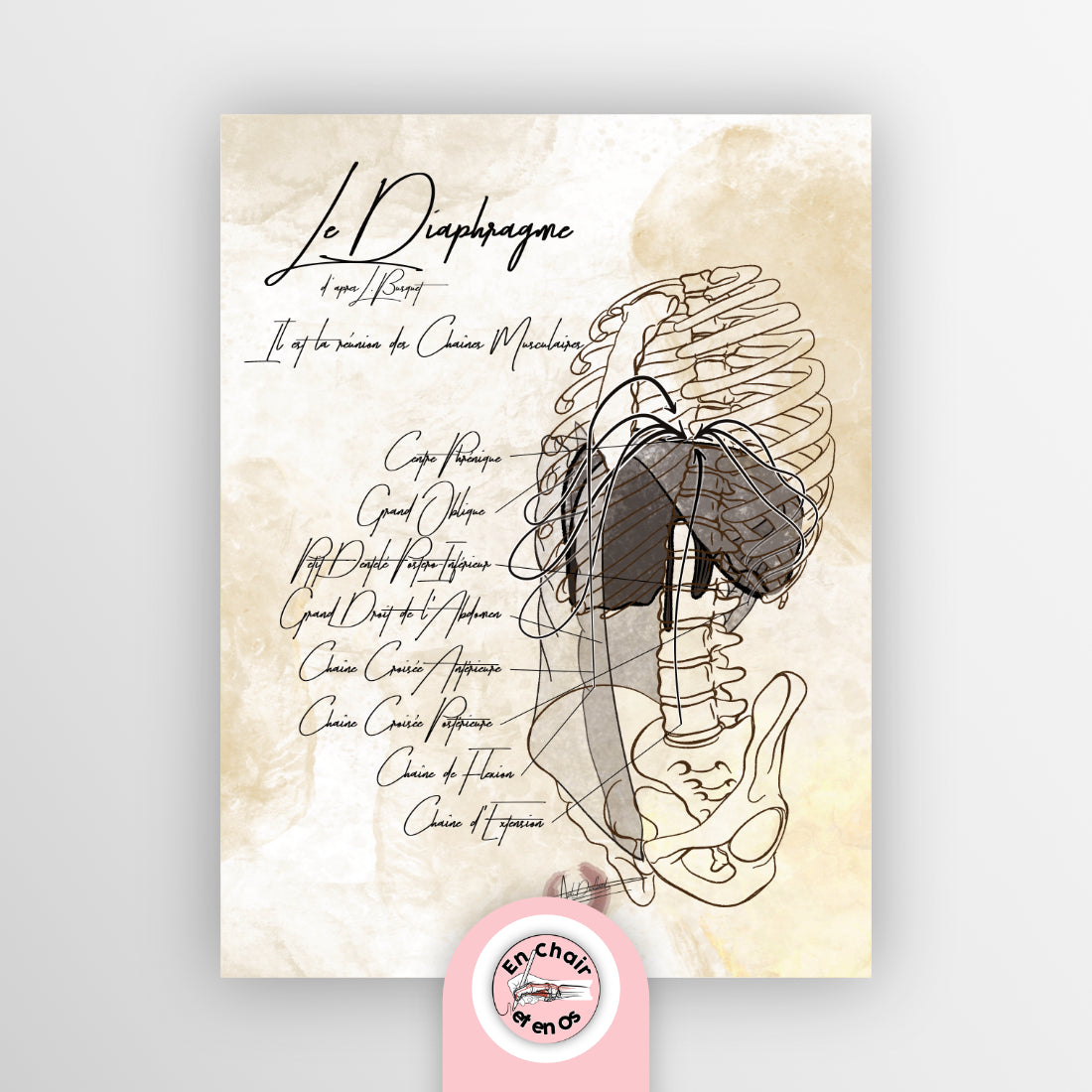
When a practitioner relies on a drawing to illustrate the physiology of the diaphragm and its interactions with other muscles, the patient is better able to grasp how certain practices or exercises can contribute to improving their condition, and to situate these aspects in the context of their own body. This reinforcement of communication is therefore key to obtaining active and lasting patient engagement in their rehabilitation.
Isn't it easier to learn something when you can see it? Doesn't a drawing help make a complex concept more accessible and understandable? 🤔
Using posters to reinforce the patient's role in their treatment
By integrating a poster such as the one for the diaphragm muscle chains, the patient becomes aware of the utility of coordination between the different parts of their human body, and above all, the weight of their active involvement in their recovery. By having a better knowledge of their breathing mechanism and the role of their diaphragm, the patient can more easily engage in specific exercises with the goal of achieving faster and more effective recovery. This changes their approach to treatment, making them more motivated and more involved. 💪
A well-chosen poster can be a true catalyst for motivation, encouraging the patient to fully participate in the suggested exercises rather than perceiving them as imposed tasks. The illustration, by providing pictorial information, transforms the patient from a passive spectator into an actor, placing their focus on their own rehabilitation.
And what if, in addition to understanding, the patient felt truly motivated to act for their healing? Isn't that a crucial element for long-term adherence to treatment? 💭
Activating motivation through dynamic bodily situations
Finally, charts play a key role in stimulating patient motivation by representing situations where the physical whole is in motion. By highlighting the utility of muscles and joints in performing certain types of gestures or movements, these charts provide valuable information and help the patient visualize their bodily system in action.
The link between anatomy and physical performance
Take the example of the Chart - The Equestrian. This image shows not only human anatomy but also how certain parts of the muscular system move and interact when a person is horse riding. The rider, by ensuring a correct posture, calls upon a coordination of their muscles, joints, and nervous system.

For a patient undergoing rehabilitation after an injury, seeing a body in motion, like that of an equestrian, can be a powerful lever for inspiration. By showing them that their own organic apparatus is capable of performing functional gestures, the patient feels motivated to compose their own path toward recovery and regain their level of physical performance, even after a recovery period.
Isn't it impressive to see how a simple movement can illustrate the complexity of the body? How can a precise movement inspire confidence in the patient and encourage them to act for their rehabilitation? 🤔
The example of the human body in specific physical activities
Another interesting application is to refer to images such as the Chart - Weightlifting – The Squat. This drawing illustrates how the muscles of the physical system, particularly the muscles of the lower skeleton like the quadriceps, hamstrings, and glutes, work in synergy during a squat exercise. A patient who might have doubts about their ability to regain functional mobility or perform specific exercises could find illustrated support in these anatomical representations. 🏋️♂️
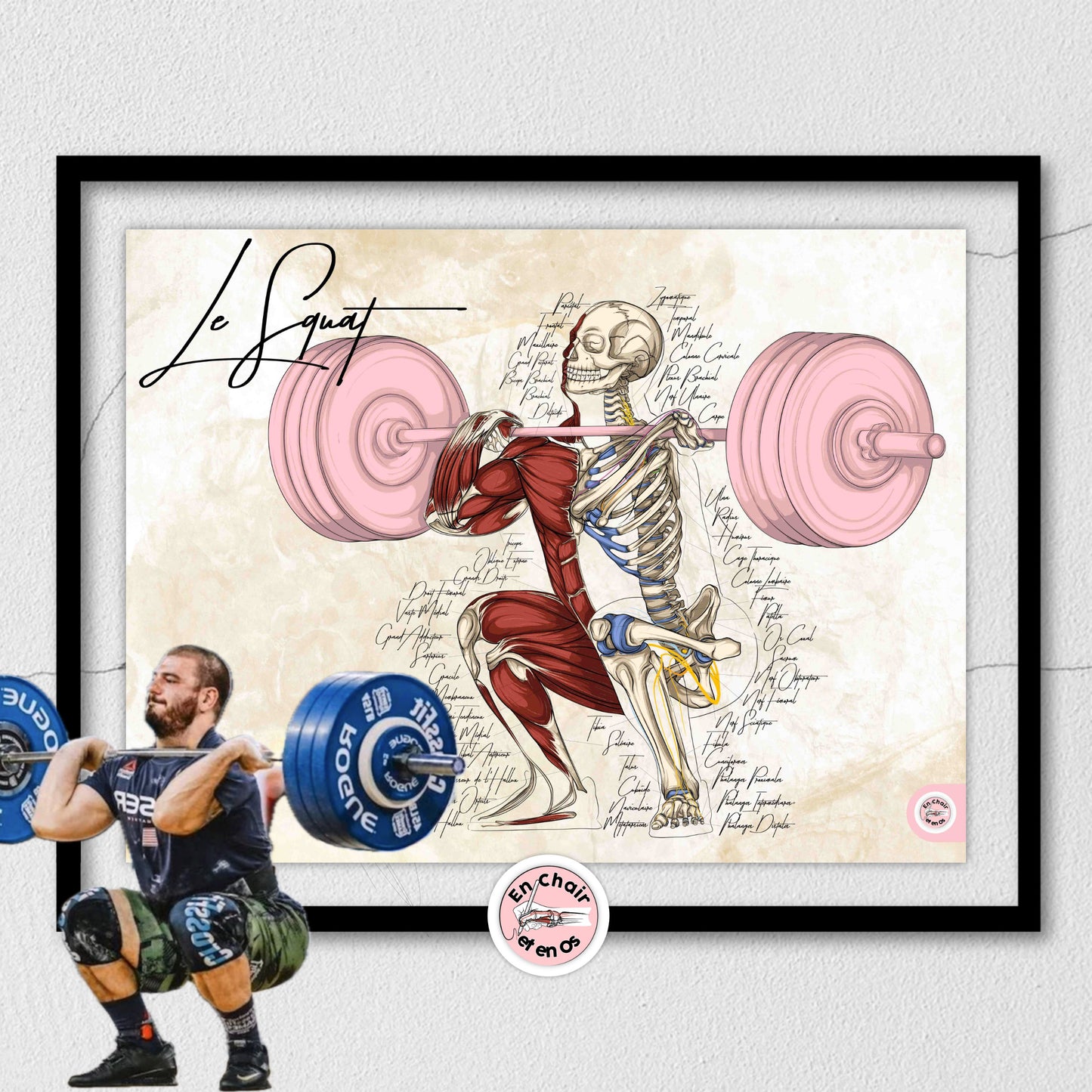
These drawings show not only the anatomy of movement but also the distribution of body load and muscle activation, which helps the patient realize the importance of every gesture in the rehabilitation of their musculoskeletal system. The physical and dynamic context of the exercise makes the final goal more concrete and accessible.
Who wouldn't feel motivated to perform a movement after seeing it illustrated with precision? Wouldn't it be a real boost for the patient to visualize themselves in the physical activity they must perform? 🎯
Conclusion
The use of anatomy charts in patient follow-up is not limited simply to a representation of the human body. But what essential role do these images really play in patient engagement?
-
They facilitate understanding of anatomical disorders and human organization.
-
They improve communication between the patient and the practitioner, making exchanges clearer and more effective.
-
They offer visual inspiration that motivates the patient to participate actively in their treatment.
Thus, every chart available on our website En Chair et En Os becomes a powerful tool for strengthening patient engagement in their own care. Healthcare professionals have every interest in integrating these illustrations into their practice to create a better communication tool and thus build an environment favorable to treatment adherence. Indeed, to visualize is to understand, and that makes all the difference for a patient engaged in their rehabilitation. 😄