
Therapeutic patient education (TPE) is a public health approach aimed at any person living with a chronic disease or a condition requiring long-term care. The patient is not merely a “recipient” of a treatment: they become an integral part of the care pathway, playing an active role in their daily life, their choices, and their ability to manage the illness over time.
Within this framework, TPE is a process that aims to: help patients better understand their illness and treatment, acquire or maintain skills, and improve patients' quality of life. In practical terms, the goal is to make the individual more aware, better informed, and more capable of assuming responsibility for managing their illness. It is also an approach to health education and health promotion, consistent with the recommendations of the World Health Organization (WHO).
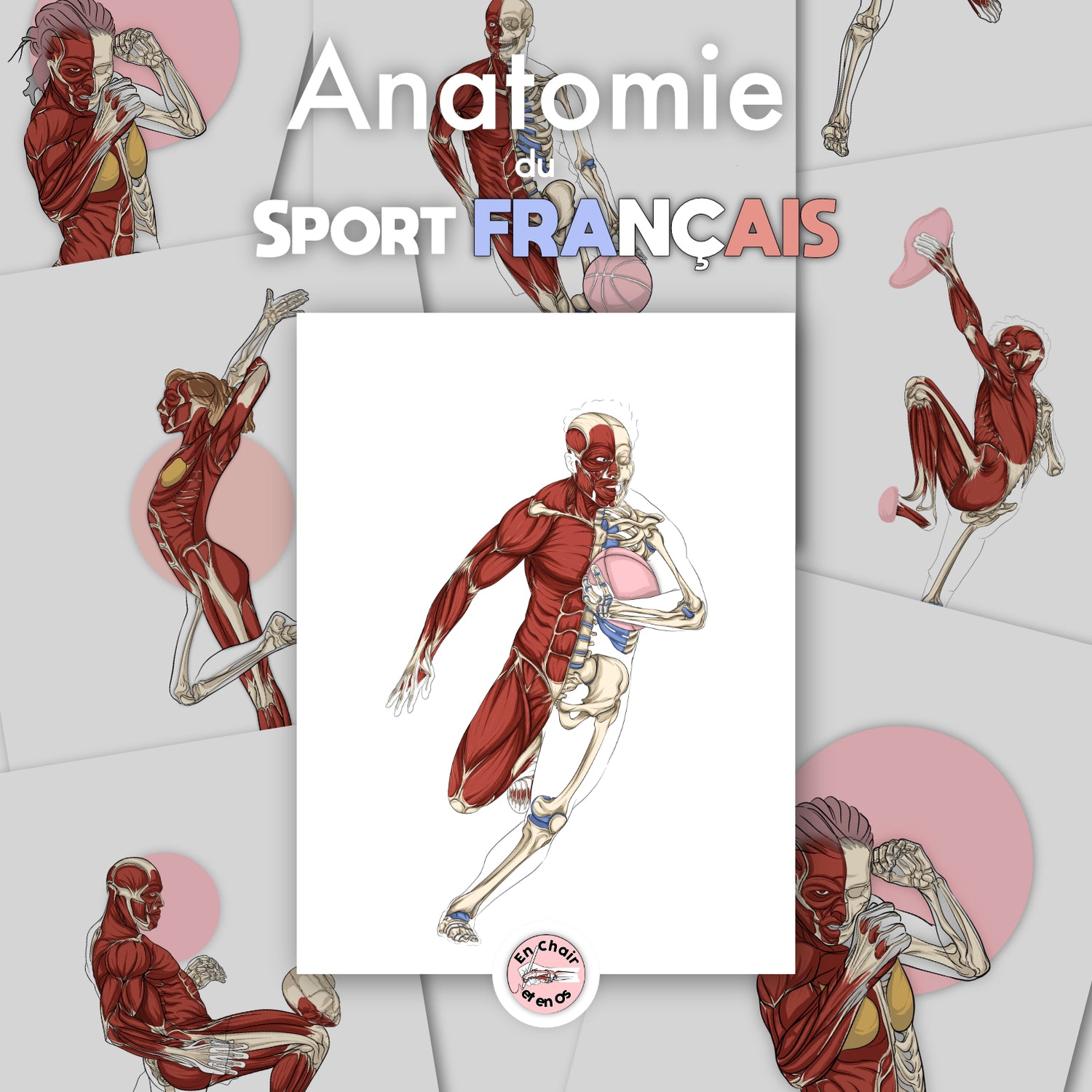
In the reality of a consultation, this approach often faces a simple hurdle: what is explained is sometimes difficult to visualize. This is where visual aids, including an anatomical chart or a 3D model, can become an educational resource designed to make information more accessible: they allow for “seeing,” locating, and making the session more concrete. In certain facilities (private practice, health center, university hospital), these aids can be integrated into broader implementation, particularly within a follow-up notebook provided to the patient.
1) Making anatomy understandable: shedding light on complex areas of the human body
Many patients encounter difficulties in understanding the anatomy and logic of therapeutic care, especially when the disease is chronic, symptoms fluctuate, or the treatment is progressive. TPE aims specifically to make this complexity understandable, without oversimplifying, by adapting to the patient's situation.
In a therapeutic patient education approach, one often begins with an educational diagnosis: assessing what the person already knows, what they have understood, what they need, and what skills they must acquire to manage the illness. This step is often formalized in a file (or form), particularly when the process is carried out in a hospital or healthcare setting, with an organization and follow-up procedure in place. Yet, for many people, the obstacle is not motivation; it is visualization. We talk about muscles, joints, nerves, and functional chains, but “it remains unclear.”
This is where anatomical charts can play a subtle but real role: they offer a stable view of the body. During an interview (individual or group), the healthcare professional can use them to point out a part of the body, link a symptom to a mechanism, and clarify a care goal. The patient leaves with a clearer mental image, which improves adherence to treatment and the ability to follow recommendations, including when the care plan is modified over the course of the disease.
2) Reducing anxiety: visualizing to reassure and make information accessible
Anxiety is very common among patients with chronic illness: fear of the disease's progression, worry about the duration of treatment, and fear of worsening or emergency. TPE also integrates psychosocial support, sometimes in connection with the family and social circle, to strengthen understanding and reduce the mental load, particularly when the patient's life is impacted by work, sleep, or a change in diet (for example, in cases of obesity or metabolic conditions).
Technical information, if not understood, can increase stress. Conversely, a clear, structured, and visual explanation can reassure. In this context, an anatomical chart (even if primarily wall decor) can become an educational tool: it helps establish concrete reference points, answer questions, and make the individual more informed. It is a simple tool to “confront” a clear representation rather than leaving room for ambiguity.
This dimension is useful in consultation, but also between sessions. A visual aid in the office can help some patients feel they are in an organized, professional place focused on understanding. This strengthens the caregiver-patient relationship, which is a major lever for treatment adherence, especially in long-term paths sometimes experienced as “permanent.”
3) Structuring the consultation: a clear guideline, a more effective explanation
Time during a consultation is limited, and therapeutic education must contend with reality: duration, organization, and workload. A TPE program is precisely a way to structure this approach, with objectives, progression, sessions, workshops, and evaluation.
In this program, visual aids often serve as a guiding thread. An anatomical chart as wall decor can be used as a reference “page”: one returns to it, points, compares, and rephrases. This allows for a more effective explanation while keeping the approach patient-centered.
A structured consultation can follow a simple logic:
- listening to the situation,
- clarifying the need,
- making information understandable,
- setting a realistic goal,
- defining an action (prevention, exercise, adaptation),
- planning a review and evaluation.
Anatomical charts, integrated into the environment, then become a subtle but useful resource for coordinating the explanation and maintaining consistency from one session to the next, even when support is provided in individual or group educational sessions.
Concrete case in consultation (TPE)
- Situation: patient with chronic lower back pain and fear of movement.
- TPE Goal: understand the “functional” logic (trunk, posture, breathing), and reduce avoidance.
- Tool: wall chart of the trunk/muscle chains, used to explain 2 simple markers.
- Key message: “The goal of the program is not to avoid all effort, but to learn to load progressively.”
- Action: a control/breathing exercise (1 minute), a progression rule (duration/activity), then self-assessment of symptoms.

Patient benefit: greater clarity, less anxiety, better understanding of goals.
Practitioner benefit: more coherent, faster, and more reproducible discourse session after session.
4) Shifting from a local to a functional perspective: giving meaning to pain
In a chronic disease, the pain or symptom is not always “local.” It may be related to behavior, lifestyle, activity, posture, stress, or compensations. TPE helps the patient understand these links, avoid catastrophic interpretations, and build more adapted choices, consistent with prevention recommendations and realistic goals.
This is where visualization becomes powerful. A wall-mounted anatomical chart, beyond its decorative role, helps connect elements: posture, joints, muscle chains, areas of tension. It contributes to making the individual more aware and informed, which fosters a sense of responsibility: “I understand what is happening, I know what I can do, I know what I need to monitor.”
This understanding also supports prevention: preventing recurrences, preventing treatment errors, and preventing abandonment of treatment when effects are slow. It also helps adapt daily life choices without feeling like a failure at the first difficulty.
5) Making explanations more interactive: the patient becomes a participant
Therapeutic patient education does not function like a lecture. It relies on interaction: questioning, rephrasing, self-assessment. The aim is to help the person acquire a skill, not just listen to information.
In this logic, a visual aid in the room, like an anatomical chart or a 3D model, promotes interactivity:
- the patient points,
- the professional explains,
- what is understood is verified,
- the recommendation is adapted.
This detail seems simple, but it significantly changes the dynamic: the patient becomes more active, and therapeutic education becomes more practical. In some programs, this interaction can be enriched by a testimonial (expert patient) or a group workshop.
6) Aiding adherence: understanding to better follow the care plan
Adherence to treatment depends on several factors: understanding, motivation, duration, work constraints, family, social circle, daily organization, and the overall burden of the disease. A TPE program aims to help overcome these obstacles through a progressive, structured, and evaluated approach, sometimes through a follow-up notebook or a simple form.
Here again, anatomical charts can contribute in a subtle way: they help clarify the “why” of an action. When the patient understands the goal, they follow through more easily. When they see the logic (even quickly, even simply), they are more inclined to maintain the effort over time.
In this sense, anatomical charts do not replace the training of healthcare professionals or the TPE approach. They are a useful resource, an educational support that reinforces explanation and strengthens adherence, especially in regular and structured implementation.
Concrete case in consultation (TPE)
- Situation: patient “failing” exercises (quit after 10 days).
- TPE Goal: improve adherence to treatment by making the goal concrete and measurable.
- Tool: anatomical chart (affected area) used to explain 1 mechanism + 1 goal.
- Key message: “We are not seeking performance; we are seeking consistency and prevention.”
- Action: micro-program (2 minutes/day), simple tracking (duration, pain, activity), return for review/evaluation.

Patient benefit: clear goal, realistic effort, sense of mastery.
Practitioner benefit: less abandonment, better continuity of the pathway.
7) Linking symptom and physiology: moving beyond the “isolated organ” vision
A patient’s health is not limited to an isolated organ. Patients experience a global situation: symptoms, fatigue, stress. TPE aims to help understand these links and guide towards consistent care.
In some cases, an anatomical chart serves as a simple tool to place a symptom within a system: breathing and posture, pelvis and trunk, muscle chain and movement, etc. This helps avoid an overly mechanical understanding (“it hurts here, so it is only here”), and makes the treatment more logical.
This approach is also consistent with recommendations and guides (Health Authority, World Health Organization) that emphasize quality, prevention, and improvement of quality of life. It can also be integrated into clinical research approaches in certain hospital fields.
8) Building a functional project: from care to autonomy
A central point of therapeutic education programs is autonomy: helping the patient manage the illness in their daily life, make choices, prevent issues, self-assess, and know when to seek help.
To achieve this goal, the process must be organized: individual or group sessions, workshops, review, evaluation, adaptation. Anatomical charts sometimes help establish an “educational” framework: one also comes to understand, not just to “receive” care.
This framework supports learning: the patient gradually acquires skills, maintains routines, adjusts their physical activity, and strengthens their adherence to treatment. This is an integral part of modern, patient-centered care, linked to the challenges of therapeutic education.
9) Enhancing the practice: a professional, educational, and reassuring environment
The therapeutic education offering can be provided by a center, a department, a university hospital, a healthcare facility, or a regional program. But TPE also happens at the very concrete level of the place of care. A practice that shows it is organized and oriented toward patient understanding helps the patient feel supported. In this context, anatomical charts as wall decor become a subtle signal: the professional values information, prevention, and therapeutic education.
They bring dual value:
- aesthetic value (wall decor),
- and resource value (visual aid useful in session).
Conclusion
Therapeutic patient education is a therapeutic and educational public health approach. It corresponds to a process that aims to help patients manage their illness, particularly chronic illness, understand the disease and their treatment, strengthen adherence to treatment, and improve quality of life.
It relies on:
- an organized TPE program,
- individual or group sessions,
- an educational diagnosis,
- workshops,
- evaluation and self-assessment,
- an educational file,
- and coordination by trained healthcare professionals, within a multidisciplinary care team.
And, simply but effectively, the care environment can support this approach. Anatomical charts, even sold as wall decor, can also become an educational resource: they help make information more understandable, structure the explanation, support prevention, and reinforce treatment adherence.