Introduction to anatomical art
Human anatomy is fascinating and complex, and we make it our specialty at En Chair et en Os. Transforming this complexity into a work of art in the form of an anatomical chart requires a blend of scientific and artistic expertise. In this article, we will explore the art of anatomy and how to create a detailed anatomical chart in the style of En Chair et en Os.
What is an anatomical chart?
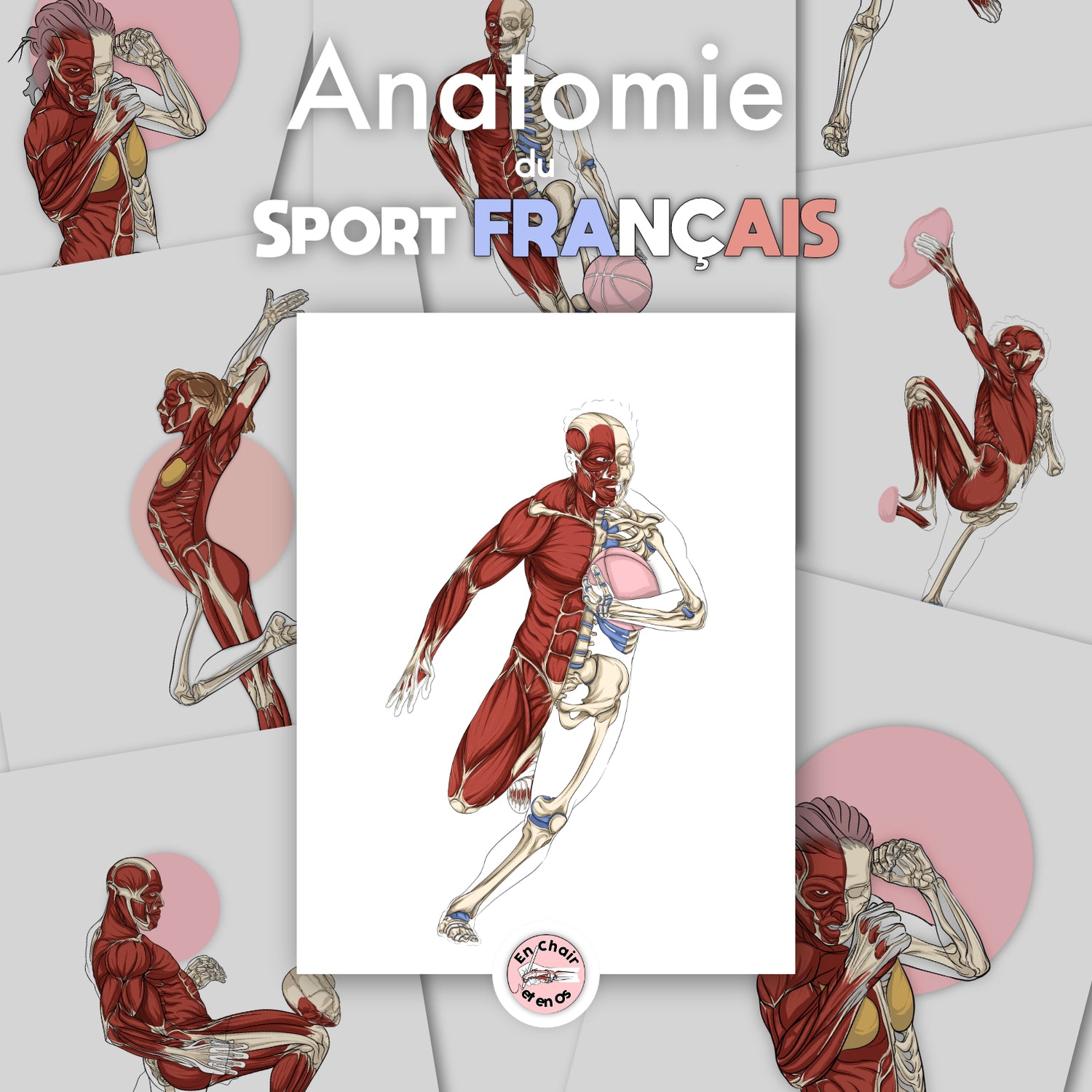
An anatomical chart is an artistic representation of the human body, highlighting the skeleton, muscles, organs, or nervous system. It must be precise and detailed, allowing for both educational and medical use. The expertise at En Chair et en Os lies in the creation of anatomical écorchés, based on a posture or a movement—for example, that of an athlete—in order to highlight anatomy in motion, such as the entire series of anatomical sports posters.How to create an anatomical chart
The creation of an anatomical chart begins with an in-depth study of human anatomy. The choice of the subject to illustrate—whether it be the human skeleton, the musculature, or a specific organ—depends on the chart's purpose. Thus, En Chair et en Os offers the creation of personalized charts based on a photo of your favorite athlete, a loved one, or anything else you wish to illustrate.The steps we go through to create our anatomical charts:
- Geometric shapes corresponding to the movement curves to be illustrated anatomically, in order to have a clear working foundation with marked proportions. The most important elements to establish are the rib cage, the pelvic girdle, and the position of the limbs.

- Drafting the skeletal and muscular structures: our precise knowledge of anatomy allows us to draw all the muscle and skeletal forms freehand, in an anatomically correct position and with the right proportions.

- Refining the anatomical structures: we now trace the anatomical structures cleanly; these lines will be definitive and will form the skeleton of our anatomical chart. The precision of the lines and the quality of the brush are the foundations of our anatomical art.

- Time for color! Now we must add color to the muscles, skeleton, and joints. We can also include the nervous system.

- Shading to finish! The shadows of the human skeleton are what give our anatomical posters their charm and are the basis of a successful medical illustration.
