Written by: Naël El Kastani
Improving patient-practitioner communication
Facilitating understanding of the human body
Communication is at the heart of the relationship with your patient. Using an anatomical poster helps to clarify explanations and make sometimes abstract concepts visible. Patients, who are often anxious or confused, find it reassuring to see precise visual representations of anatomical structures. Whether it is to explain the functioning of the heart, the details of the human skeleton, or the specific features of the spine, a detailed chart makes consultations more interactive and educational.
For example, an En Chair et en Os anatomical chart illustrating the muscular system makes it possible to explain the causes of chronic pain or injuries with great precision. Seeing a visual representation helps patients better understand their condition and the proposed treatments.
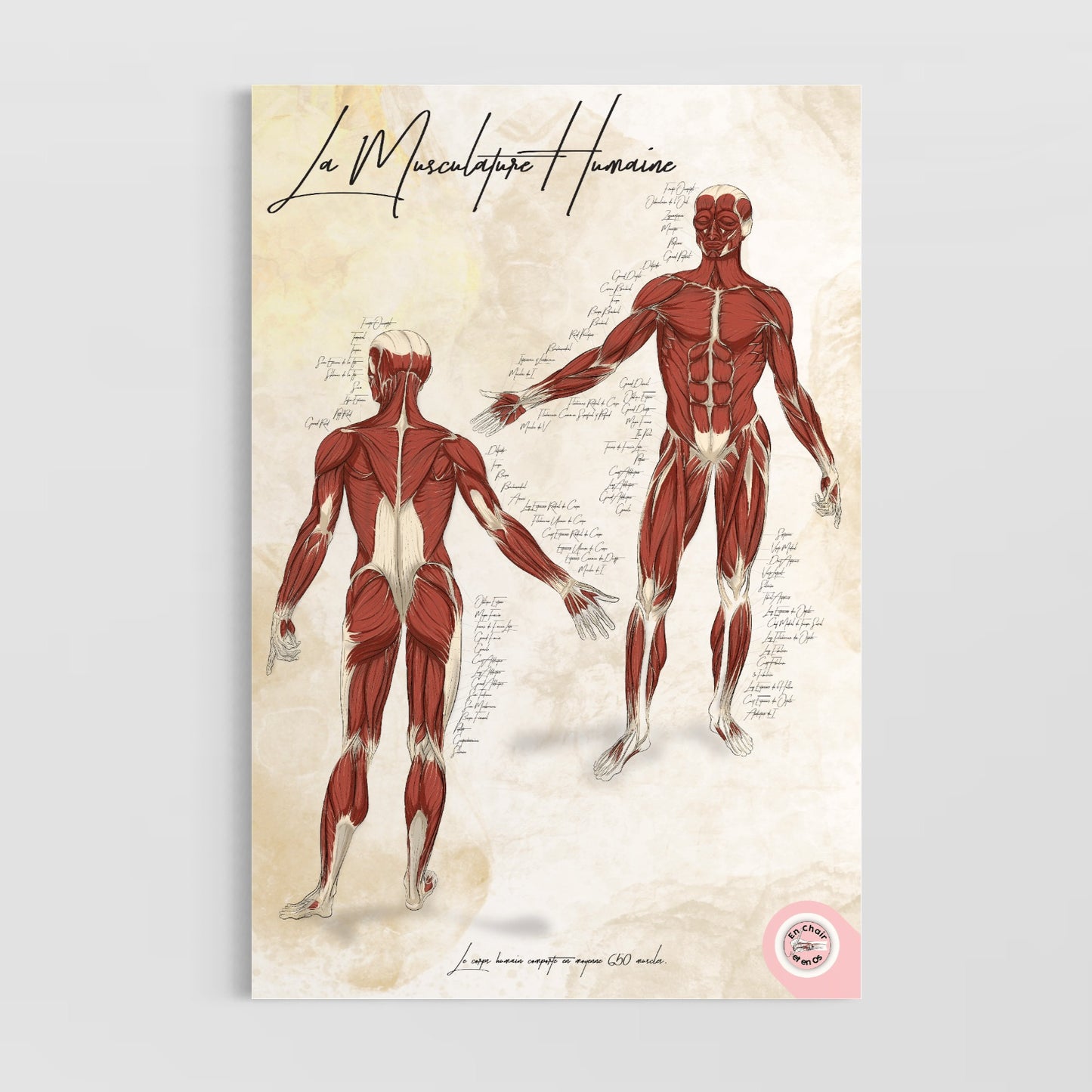
Indeed, this chart shows the muscles, their attachments, and their interactions in detail, which is particularly useful for explaining sports injuries, muscle tension, or overuse syndromes. By visualizing the muscles involved, patients can grasp why certain movements or exercises are recommended to them, thereby strengthening their adherence to the treatment plan.
Strengthening continuing medical education
These charts are not only useful for patients, but also for healthcare professionals themselves. Medical offices often host medical students or interns. Anatomy illustrations serve as a valuable learning resource. By having anatomical posters available, you can facilitate the continuing education of your team and maintain a high level of competence within your practice.
Aesthetic and professional enhancement of your office
Creating a welcoming and professional environment
The aesthetic aspect of your office plays a crucial role in how your patients perceive your practice. Anatomy charts and posters add a touch of professionalism and expertise to your space. A well-placed anatomical chart can transform a waiting room into an educational and interesting space, reducing patient anxiety by keeping them occupied in a constructive way.
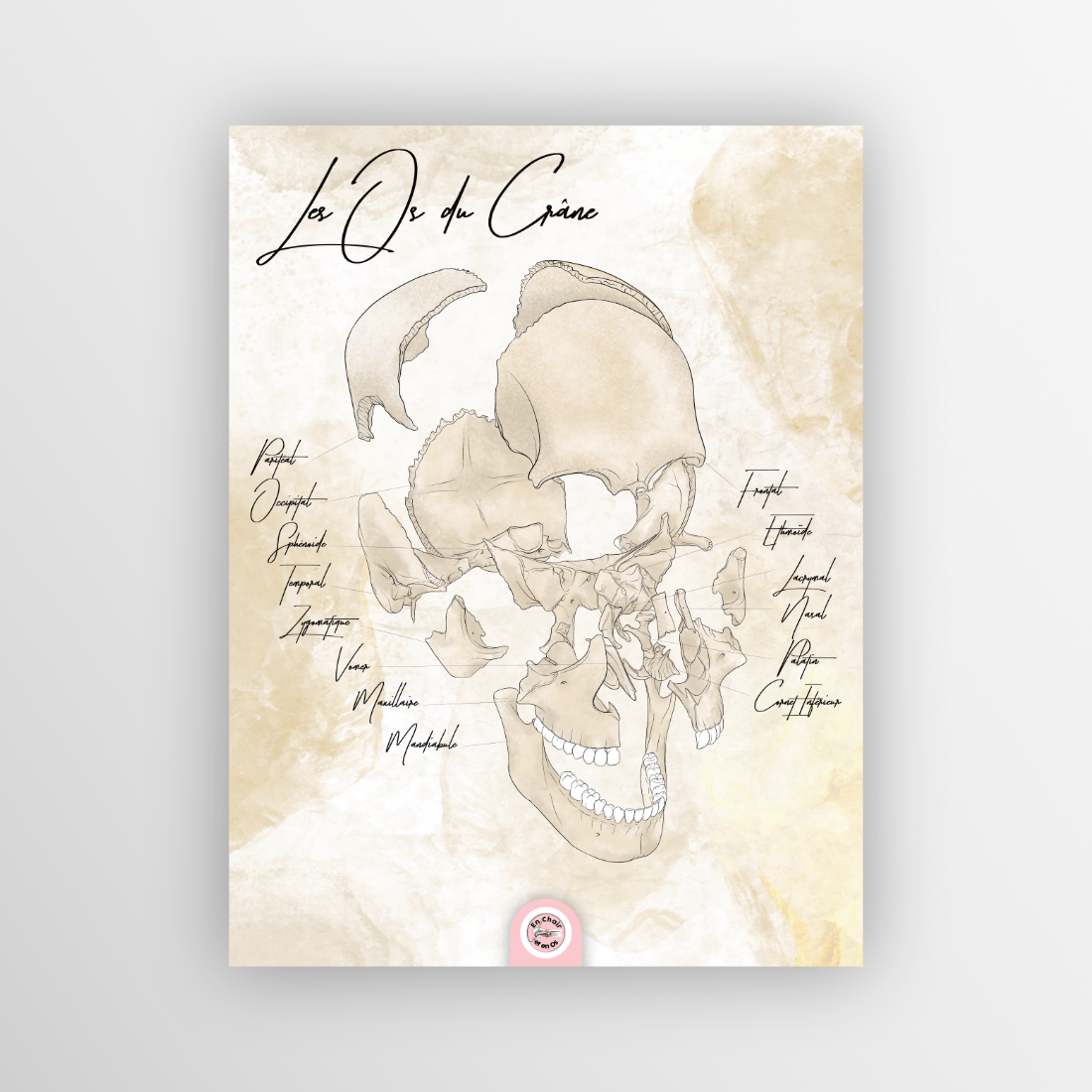
For example, you can choose a vintage human skeleton poster or an anatomical chart detailing the human brain to add an artistic and scholarly touch to your decor. This shows your patients that you value their care, including the environment in which they are received.
Affirming your expertise in medical anatomy
By displaying medical posters and anatomical illustrations, you reinforce your image as an expert in medical anatomy. Patients are more inclined to trust a healthcare professional whose office is well-equipped and informative. This can also serve as an effective marketing tool, as patients are likely to recommend a practice that distinguishes itself by its attention to detail and the quality of its educational material.
Choosing the best anatomical posters for your office
Selecting quality posters
When choosing charts, it is important to prioritize durable materials and high-quality printing. The details and precision of the images must be impeccable to serve as a reliable reference. On our site En Chair et en Os, we are committed to offering anatomical charts made with care, guaranteeing a long lifespan.
The educational posters we offer cover various parts of the human body, including precise representations of the digestive system, foot, brain, and muscles. Each chart is designed to be both educational and aesthetic, meeting the needs of the most demanding healthcare professionals.
Customizing your choice according to your needs
Every medical office is unique, and it is important to choose posters that reflect your specialty and the needs of your patients. An orthopedist might opt for foot anatomy illustrations to explain bone pathologies, fractures, and musculoskeletal injuries to patients. These visual representations allow for a better understanding of the affected areas and the necessary surgical or therapeutic procedures.
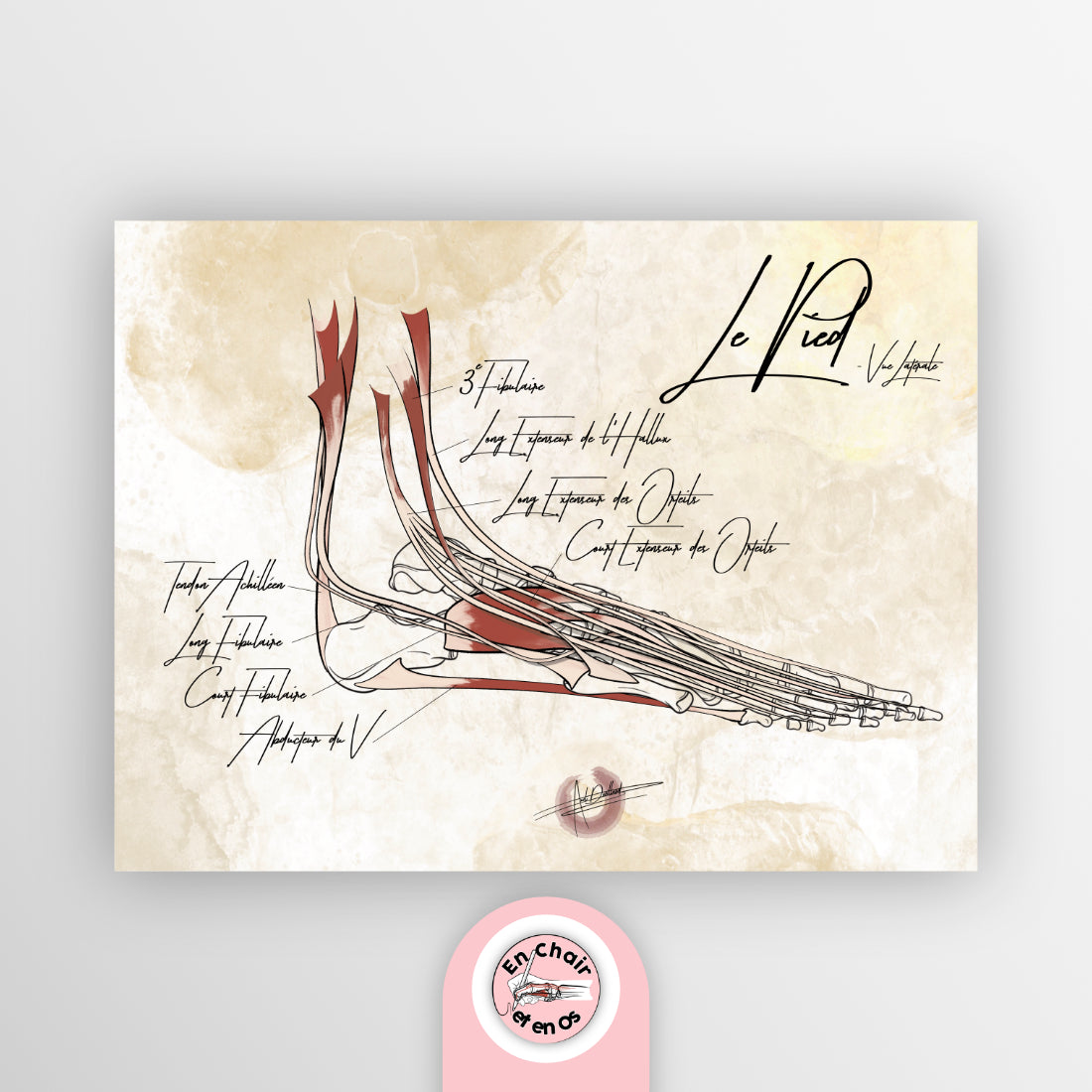
While a neurologist will prefer anatomy posters of the brain and nervous system to illustrate neurological conditions such as strokes, brain tumors, or neurodegenerative diseases. These posters help explain the complex functioning of the brain and nervous system, thereby facilitating communication regarding diagnoses and treatment options with patients.
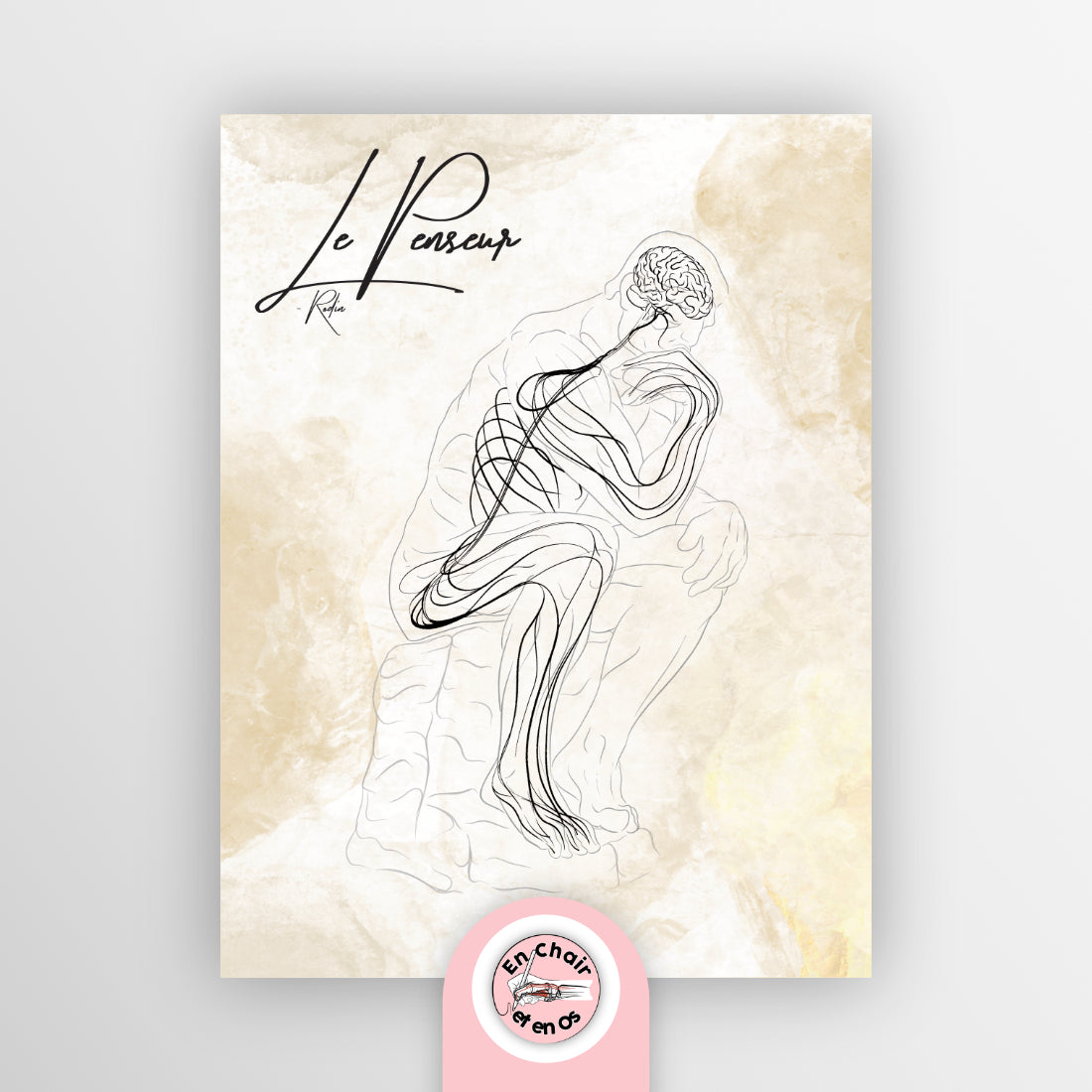
For an in-depth study of anatomy, our posters offer true scientific precision. You can explore our collection and select the pieces that best match your specific requirements.
Conclusion
Choosing an anatomical poster for your medical practice improves communication with your patients, making complex concepts more accessible and strengthening their understanding and trust. These anatomical posters transform explanations into interactive learning experiences, demonstrating your commitment to their well-being.
In our human-centered profession, anatomical charts serve as a reminder that medicine is as much about sharing knowledge as it is about providing care. Enrich your consultations and improve the quality of care with these essential visual tools!