
Decorating your office is not just about choosing pretty decor. In an osteopathy practice, every detail counts: the ambiance, materials, lighting, functional furniture, and even the waiting area all contribute to the patient's experience. A well-thought-out space can promote relaxation, reinforce the practitioner's image of quality, and help create a setting conducive to relaxation.
Whether you are in the middle of a setup project or simply rethinking the layout of your space, this blog post gives you concrete ideas for furnishing your medical office with taste. The goal is simple: decorate your office in a professional and comfortable way, while highlighting your work and your personal style.
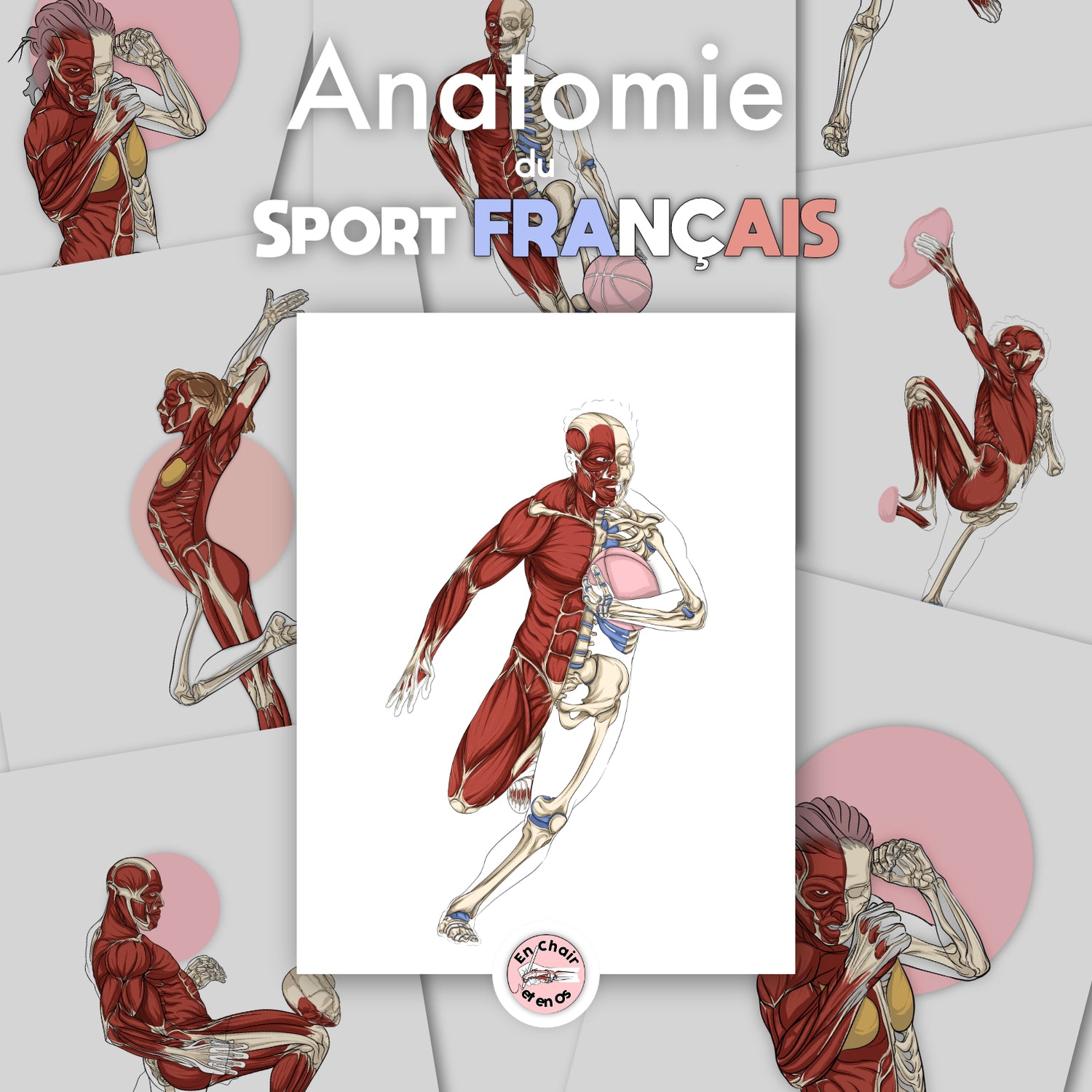
At En Chair et en Os, we create wall decor inspired by the human body and human anatomy. Our anatomical charts, artistic posters, and murals are designed for health professionals who wish to combine art, information, and visual identity.
Why take care in designing your osteopathy practice?
The decoration of an osteopath's office has a real impact on the first impression. From the entrance, the patient observes the general aspect of the place: the chair in the waiting room, the side table, the storage, the curtains, the light, the wall color, or the choice of accessories. All this sends a message.
A well-decorated office can:
- help create a warm atmosphere;
- promote relaxation before an osteopathic treatment;
- make waiting more pleasant;
- inspire confidence through a clear, clean, and consistent setting;
- reflect your commitment, your sense of quality, and your human approach to health;
- preserve an impression of confidentiality in areas for discussion or administrative tasks.
In short, decoration is a simple but powerful way to optimize space without cluttering the office.
1. Create a soft and reassuring atmosphere
In an osteopathy practice, the atmosphere must be soft, sober, and comfortable. The ideal is to compose a visual cocoon that reassures without infantilizing. For this, it is better to opt for natural tones, authentic materials, and variable-intensity lighting.
The most suitable colors are often:
- off-white;
- beige;
- sage green;
- light gray;
- stone shades;
- linen.
These colors help create warm decor without excess. They are particularly effective in a small space or a small waiting room, as they visually enlarge the space while maintaining a bright look.
To reinforce this atmosphere, you can add:
- soft lighting;
- soft background music;
- some light curtains;
- a well-placed flower or plant;
- a decorative element made of natural material.
The idea is not to overdo it, but to build a comfortable space that is conducive to relaxation.
2. Take care of the waiting room
The waiting room deserves special attention. It is often the patient's first real contact with your world. A pleasant wait reduces stress and better prepares the patient for care.
Here are some tips for setting up this space:
- choose one chair or several comfortable seats;
- provide a small table to place a magazine, a printed article, or a basket;
- install discreet storage to keep the place tidy;
- prioritize materials that are easy to maintain and durable equipment;
- create a welcoming feel with a few sober decorative elements.
You can also dedicate a corner to reading with practical information about the session's flow, pricing, privacy policy, or legal notices for your business. This reinforces the serious nature of the office while reassuring visitors.
3. Integrate anatomical charts and wall decor
Wall decor is particularly relevant in an osteopathy practice. It allows you to decorate your office with consistency, as it creates a direct link between your work world and the human body.
The anatomical charts can serve several functions:
- embellish a wall;
- enrich the information provided to the patient;
- serve as support during an osteopathic treatment;
- highlight your specialty, for example, cranial osteopathy or support for sports enthusiasts.
In an office, a well-chosen poster or anatomical print can become a real point of inspiration. It is not just a visual accessory, but a decorative element that expresses your professional identity.
Classic anatomical charts
Classic visuals centered on human anatomy are perfectly suited to a sober and elegant office. They highlight your expertise while maintaining a timeless look.
Sports-oriented designs
If you work with sports enthusiasts, you can opt for more dynamic works, focused on movement, muscles, or joints. This helps create an immediate connection between your specialty and your decor.
Artistic works
If you want a more unique result, blending art and anatomical precision, you can choose a more expressive series. This type of decoration gives a more personal dimension to your office without losing the link to your profession.
4. Think of the office as a complete workspace
An osteopathy practice is not just a treatment room. It is also a workspace, sometimes with a desk corner, an administrative area, and treatment equipment.
To maintain an impression of calm, you must integrate this reality without letting it overwhelm the space.
A few tips:
- arrange a discreet desk corner;
- choose functional furniture;
- provide closed storage for equipment;
- limit the visual presence of computers;
- separate the treatment side from the administrative side as much as possible;
- maintain fluid circulation between the consultation table and storage areas.
A well-organized office gives a sense of mastery and quality. This also contributes to the confidentiality of exchanges and the comfort of both the practitioner and the patient.
5. Choose the right materials and furniture
The choice of materials greatly influences the final look. For an osteopathy practice, it is better to prioritize simple, durable, and warm materials.
You can opt for:
- light wood;
- linen;
- certain natural textiles;
- matte finishes;
- stone or sand tones.
In terms of furniture, the idea is to reconcile aesthetics and use. A beautiful table, a comfortable chair, a discreet storage unit, or a minimalist shelf are often enough to structure the space. There is no need to accumulate accessories to obtain a warm atmosphere.
If you want to reinforce the character of the place, you can add a painting, a figurine, or even a metal figurine if it remains consistent with the whole. Again, detail counts more than quantity.
6. Adapt the decoration to your practice
Not all offices look the same. Your decor can reflect your way of practicing, your sensitivity, and the nature of your patient base.
For a general practice
Favor decor that is light, soothing, and easy to read visually. The goal is to reassure.
For a sports-oriented practice
Highlight works related to movement, muscle chains, or performance. This creates an immediately consistent setting.
For a premium or very contemporary office
Focus on a few pieces, but of high quality: beautiful wall coverings, a few strong artworks, subtle wallpaper on a single wall section, and well-designed furniture.
7. Mural, wallpaper, or custom artwork?
If you want to go further, a custom wall creation can transform the office's identity. It is an excellent solution for decorating your office with impact while remaining consistent with your practice.
Several options exist:
- a hand-painted anatomical mural;
- illustrated wallpaper;
- a large painting;
- a poster composition;
- artistic wall covering.
This type of layout can be particularly interesting if you want to make an impression from the entrance or structure a wall that is too empty. It is also a good way to express a strong commitment to a more refined aesthetic.
8. Mistakes to avoid
To succeed in your layout, it is better to avoid certain traps:
- overloading the room with too many decorative elements;
- multiplying styles without consistency;
- forgetting the practical aspect of the office;
- neglecting storage;
- leaving computer equipment or administrative material too visible;
- creating a cold, impersonal, or overly clinical universe.
The right balance consists of keeping a place clear, fluid, and dedicated to well-being.
9. Our concrete tips for decorating your office
If you are looking for a simple method, here is an effective base:
- start with a palette of soft colors;
- choose functional furniture;
- add one or two strong decorative elements;
- work on lighting with variable intensity;
- keep a discreet desk corner;
- provide a pleasant waiting area;
- integrate wall decor consistent with the human body;
- ensure that each addition makes sense.
This is often the best way to have an office that inspires confidence, promotes relaxation, and supports your image as a practitioner.
Conclusion
Decorating your office is not just about embellishing a space. It is about designing a health space that is welcoming, professional, and deeply human. A warm atmosphere, well-chosen materials, a coherent layout, and relevant wall decor can transform the patient's experience from the first few minutes.
Whether you want to set up your medical office in a minimalist, artistic, or sportier style, each choice must serve the same objective: create a space conducive to relaxation, consistent with your practice, and pleasant on a daily basis.
At En Chair et en Os, we imagine works inspired by the human body to help health professionals decorate their offices with meaning. Our creations combine information, aesthetics, and visual identity to make each office a unique place.
- The choice of a selection triggers the update of the entire page.
- Opens in a new window.