Written by: Naël El Kastani
The utility of anatomical charts in medical education
An essential educational tool
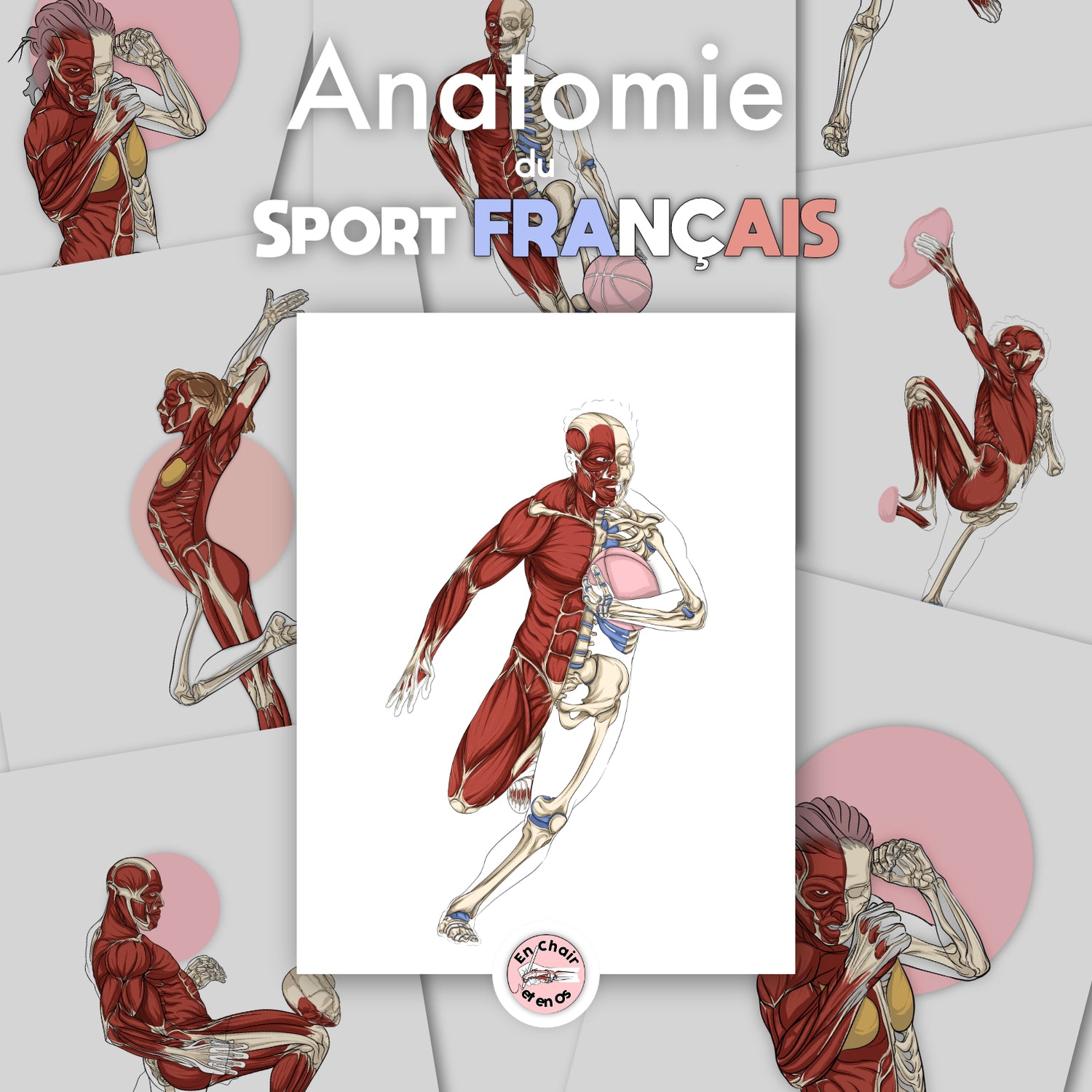
In the context of teaching anatomy, the anatomical chart of human musculature plays a leading role. Students in medicine, physiotherapy, osteopathy, ethiopathy, or chiropractic can easily understand and memorize the organization and functioning of human body muscles thanks to such an anatomical poster. By observing precise anatomical models of the human skeleton, they can visualize muscles from a practical angle, which enhances the learning of muscular anatomy and their understanding of the characteristics and functions of muscles. The use of anatomical models like this one allows for viewing the complex interactions between muscles, tendons, ligaments, and other components of the human body in a clear and structured manner.
The information provided by the Anatomical Chart - The Musculature is indispensable for students and practitioners in training, as it allows for the visualization and memorization of the different muscular areas of the human body. With practical formats such as the global illustration of body structures, this chart is a durable educational tool that can be used for years in medical training centers. Furthermore, by having this product in your educational materials, you contribute to better muscular rehabilitation among students and young practitioners, providing them with a solid foundation for their future consultations.

A model for understanding muscular pathologies
In addition to its function as an educational tool, this poster is an excellent way for medical students to study muscular pathologies. A muscle can be affected by various conditions: tears, tendonitis, contractures, etc. With the help of the poster, it is possible to identify the affected muscles, observe their interaction with other structures such as bones and nerves, and understand the symptoms associated with these disorders. By studying the muscles of the human body from this perspective, students are better prepared to diagnose and treat specific pathologies.
Within the scope of medical studies, this poster allows for linking the taught theories directly to the practical applications that future doctors will encounter. By studying muscles in detail and understanding the characteristic function of each muscle group, students can better grasp the impact of injuries or imbalances. Thanks to this poster, they will also learn ways to prevent or treat these pathologies in a clinical or hospital setting.
The role of anatomical charts in the practice
An indispensable communication tool with patients
During consultations, the use of the anatomical chart of human musculature becomes a valuable asset. Whether it is a medical student, a doctor, or a physiotherapist, it is often difficult to make a patient understand the extent of their muscular injury or pain. The poster then becomes an effective means of medical communication. By showing precisely the muscles involved in the pain or pathology, the professional can better explain the possible treatments to the patient.
Furthermore, by using a quality visual aid, patients are better informed and understand more quickly what is happening in their body. The anatomical chart allows for the visualization of muscles and the identification of areas of pain or restricted movement. This not only facilitates communication with the patient but also improves their commitment to prescribed care, as they can directly see the affected areas.
Assisting in diagnosis and treatment personalization
Another major advantage of posters is their ability to improve diagnostic accuracy. When a patient presents with symptoms, it is essential to locate the affected areas precisely to establish an adapted treatment plan. By using an anatomical chart of the muscles, the healthcare professional can examine the specific areas that show signs of tension, tearing, or fatigue.
The skeleton and muscles work in synergy to maintain posture, stabilize the body, and allow movement. Muscles, by contracting, generate the force necessary to move bones, while the latter provide structural support and an anchoring base for tendons. Anatomical models of the human skeleton and musculature, laminated and printed on high-quality paper like those available on our site En Chair et en Os, perfectly illustrate this interaction. They help visualize how muscular force is transmitted to the skeletal structure, allowing for an in-depth understanding of the mechanics of the human body. By showing this to your patients, you highlight the importance of maintaining an optimal balance between muscular strength and the skeleton, which is essential for harmonious, pain-free bodily function.

The impact of anatomical charts on treatment adherence
Motivating patients to follow treatments
Patient adherence to treatments is a major issue for the success of care. By explaining the benefits of certain exercises or treatments on specific areas in a visual and detailed way, the poster becomes a valuable tool for motivating the patient to continue their rehabilitation sessions. When the patient sees, for example, the direct impact of certain exercises on posture, it can encourage them to follow the treatment recommended by their practitioner more diligently.
Thanks to this anatomical model, the patient better understands the link between recommended exercises and muscular rehabilitation. The posters detail not only the location of the muscles of the human body but also their role in performing movements and activities of daily life. This helps to reinforce information, trust, and the patient's commitment to their care journey.
Personalizing care and optimizing results
An anatomical chart of human musculature also allows for more precise personalization of care. Since every patient is unique, specifically understanding the muscle areas affected by injuries allows treatments to be adapted to individual needs. For example, a practice or rehabilitation clinic with such a poster can offer exercises adapted to the patient's specific condition. This type of anatomical accessory is essential for personalizing the therapeutic approach and maximizing results.
By offering a poster as a learning and diagnostic tool, the healthcare professional helps the patient better understand the stages of treatment and to actively invest in their recovery. The use of a laminated anatomical chart of the muscles, printed on high-quality paper, allows for tracking the evolution of the treatment over the course of sessions and adjusting exercises and care based on progress made.
Conclusion
Anatomical charts such as the Anatomical Chart - The Musculature are indispensable tools for healthcare professionals. They not only facilitate the teaching of anatomy and the understanding of muscular anatomy for medical students, but they also play a key role in communication with patients and the improvement of treatments. Available in a practical format, laminated and printed on high-quality paper on our site En Chair et en Os, these products are perfect for those wishing to enrich their materials. By adding a poster to your cart, you ensure that you have an educational, diagnostic, and therapeutic tool to improve your care and optimize treatment results.