Written by: Naël El Kastani
Creating a dynamic and attractive practice with En Chair et en Os sports anatomical posters
Improving aesthetics while reinforcing your specialization
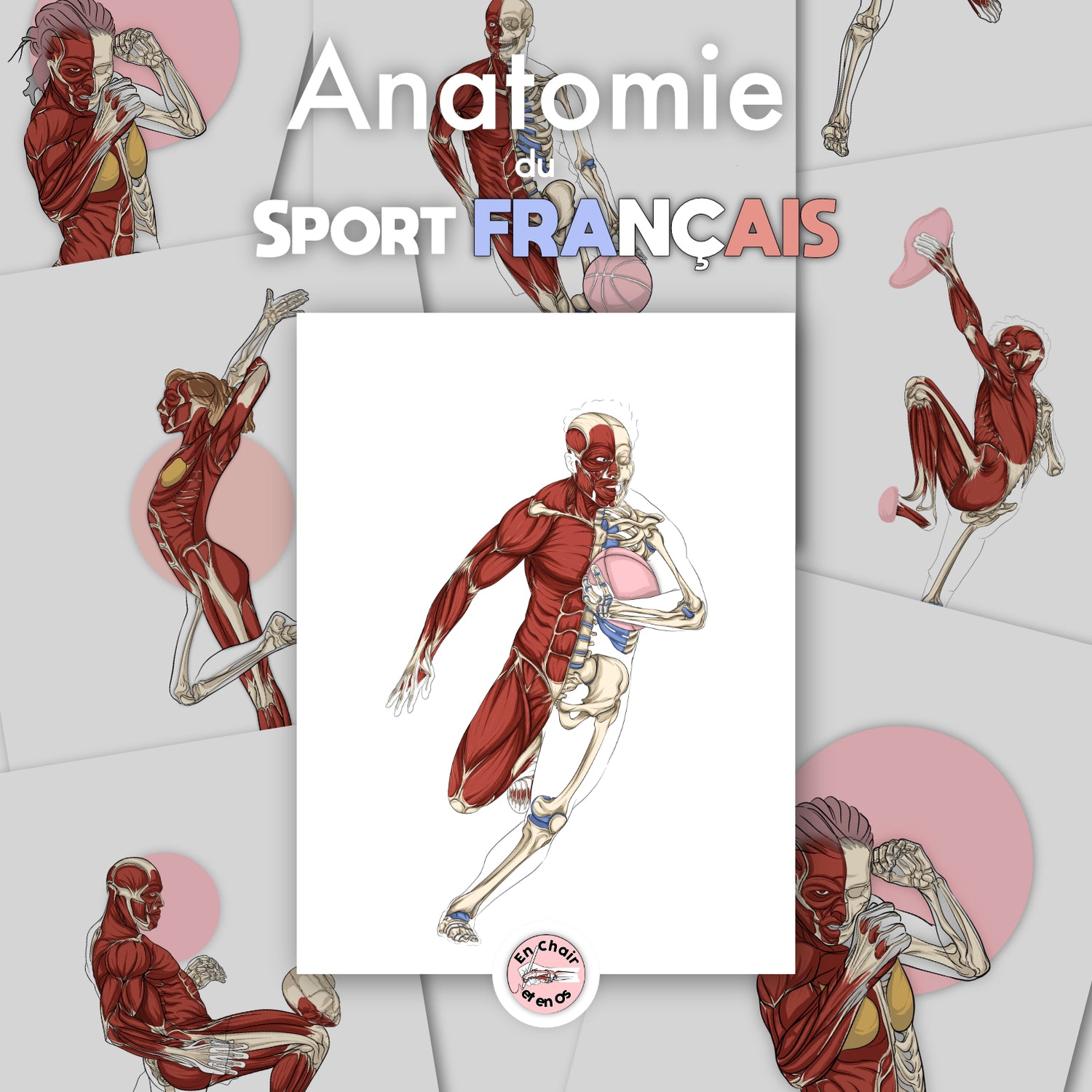
Choosing anatomical charts suited to your specialty can transform the look of your medical office while reinforcing your perceived expertise. Take the Rugby Anatomical Chart as an example. This anatomical model is ideal for a healthcare space specializing in sports medicine or physical rehabilitation. Rugby is an intense sport that causes complex injuries, particularly to the muscles, ligaments, and human skeleton.
By integrating this type of chart into your healthcare office, you provide visual information that shows your patients you are aware of the specifics of their sports discipline. They feel understood and, as a result, develop greater confidence in your skills. This chart thus becomes a tool to strengthen the bond with your patient base, while visually structuring the space in a way that reminds everyone who comes to see you—whether they are a healthcare professional, a student, or a patient—of your specialization.
Customizing the ambiance based on your athletic clientele
It is essential to personalize the environment of your space to meet the expectations of your consultees. If a large portion of your clientele is made up of athletes, it may be wise to display anatomical charts related to the sports they practice. For example, the Climbing Anatomical Chart is particularly relevant for fans of this sport. Climbing places heavy demand on the muscles and joints of the hands, arms, and feet.
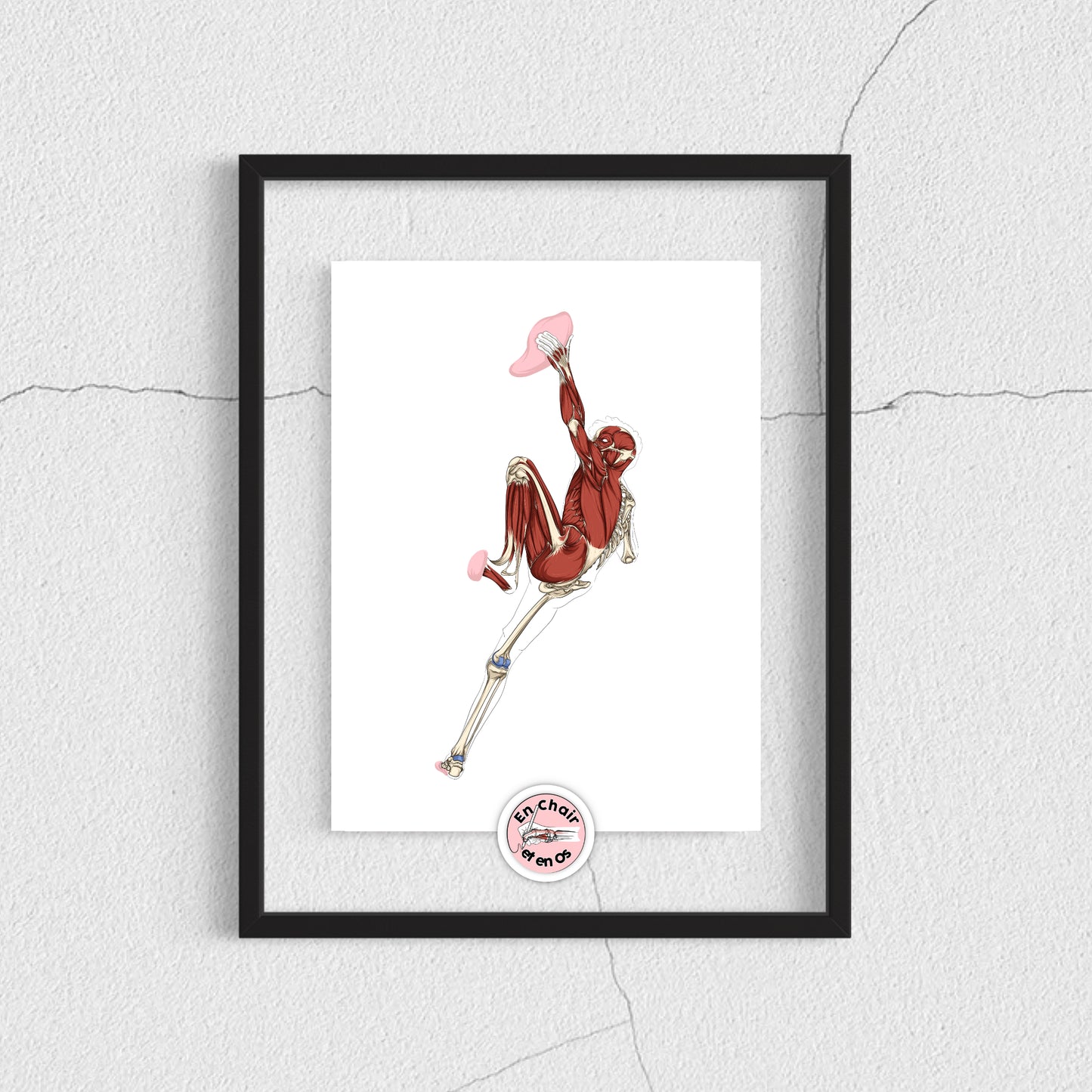
This anatomical poster illustrates the areas of the human body most heavily used, and by displaying it in your medical office, you show your climber patients that you are capable of understanding and treating their specific issues. This model is more than just decoration; it is tangible proof of your commitment to providing care tailored to every patient.
An essential educational tool for therapeutic education
Clarifying sports pathologies through detailed illustrations
Anatomical charts are not just limited to beautifying a medical space; they are also excellent educational tools for explaining pathologies to patients. Take the Golfer Anatomical Chart. This poster shows, in precise detail, the anatomy of the human musculature, bones, and joints involved in the golf swing, which is very useful for explaining common human body injuries like lower back pain or tendonitis. Thanks to this chart, you can concretely illustrate the source of the pain felt by golfers, facilitating a better understanding of their diagnosis and treatment.
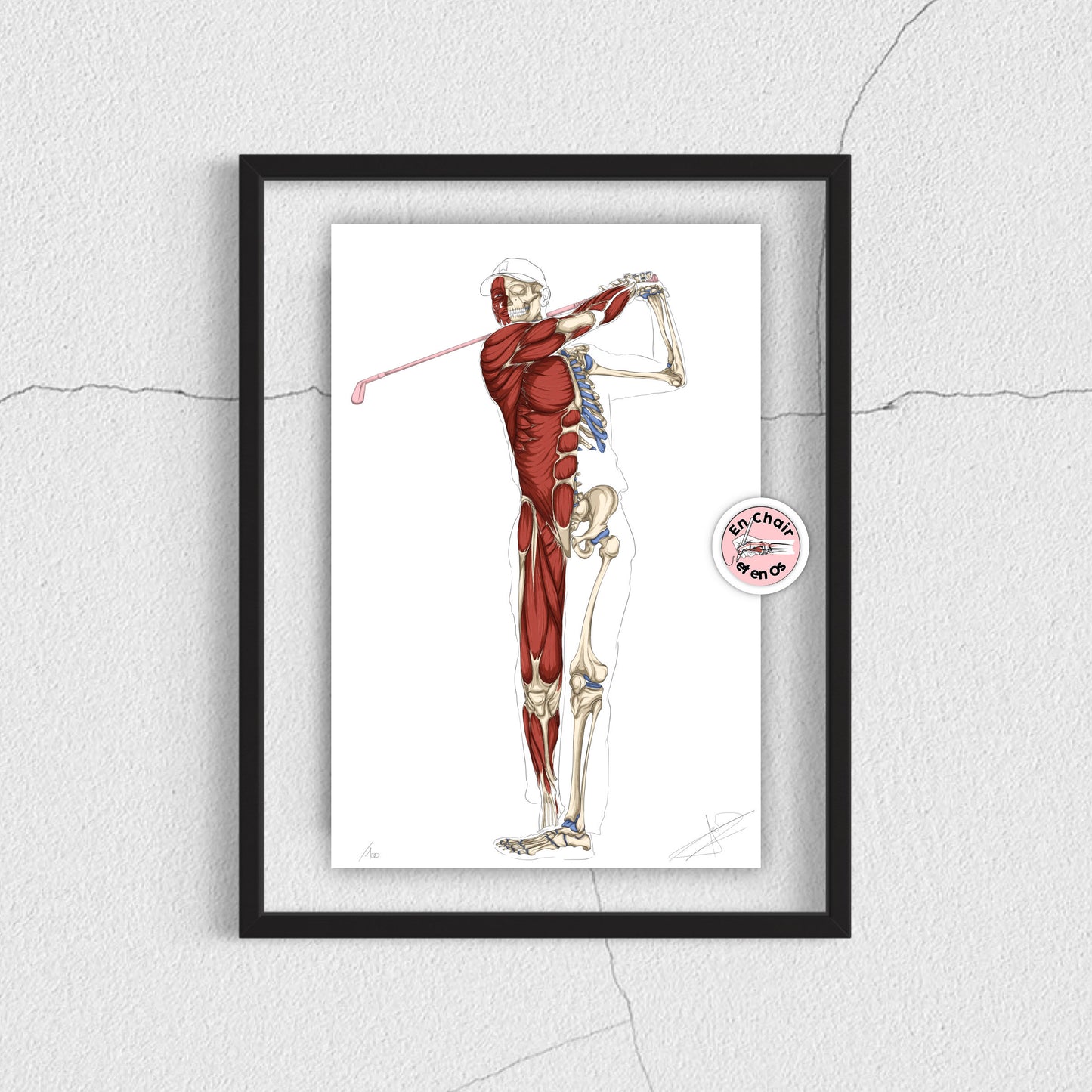
A good understanding by the patient promotes adherence to treatment and, consequently, the effectiveness of care. By using this format of anatomy chart, you are not just decorating your office; you are providing clear and accessible medical information, thereby enhancing the quality of your consultation.
Encouraging adherence to treatments through better visual understanding
You know how crucial it is for your consultees to fully understand the reasons for the treatments you suggest to them. The Tennis Player Anatomical Chart is an excellent tool for explaining common injuries such as hand sprains, but also epicondylitis, commonly known as tennis elbow. This anatomical chart allows you to show the muscles and tendons involved in a very visual way, making the explanation more accessible. When your consultees clearly see what is causing their pain, they are often more motivated to follow your recommendations after your diagnosis. This adherence is essential for the success of the treatment.
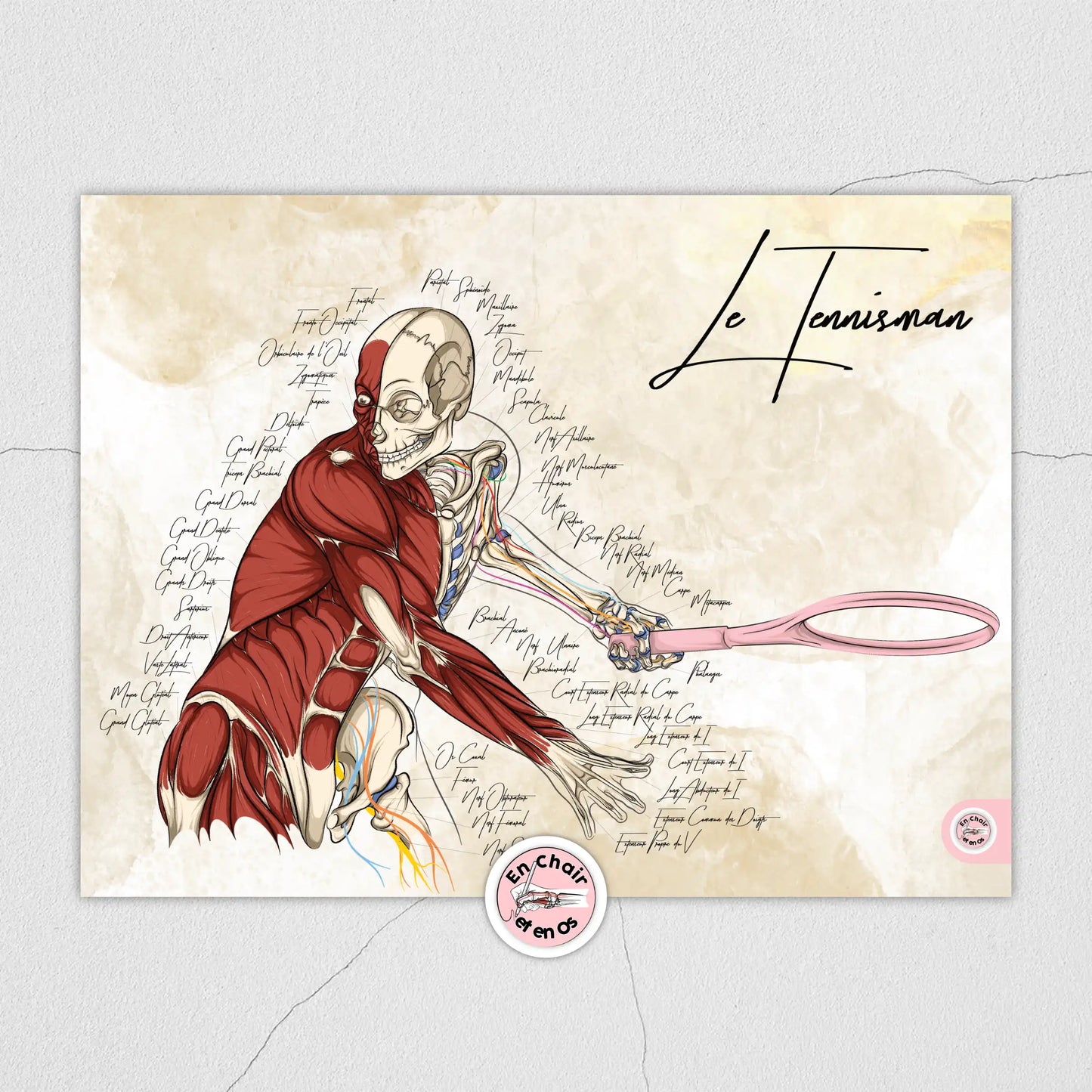
By displaying this model of chart, you create an environment where learning and understanding the human body are at the heart of the consultation, which is beneficial for both you and your patients.
Affirming the identity of your practice through sport-specific models
Affirming your specialty and attracting a targeted clientele
Affirming your specialty in sports medicine can allow you to attract a targeted, loyal clientele in search of quality care. For example, if you are located in a region where basketball is a popular sport, the Basketball Player Anatomical Chart could be a strategic choice. This poster format illustrates the anatomy of the human musculature and the joints most heavily used in this sport, and allows you to explain common injuries such as ankle sprains or knee tendonitis.
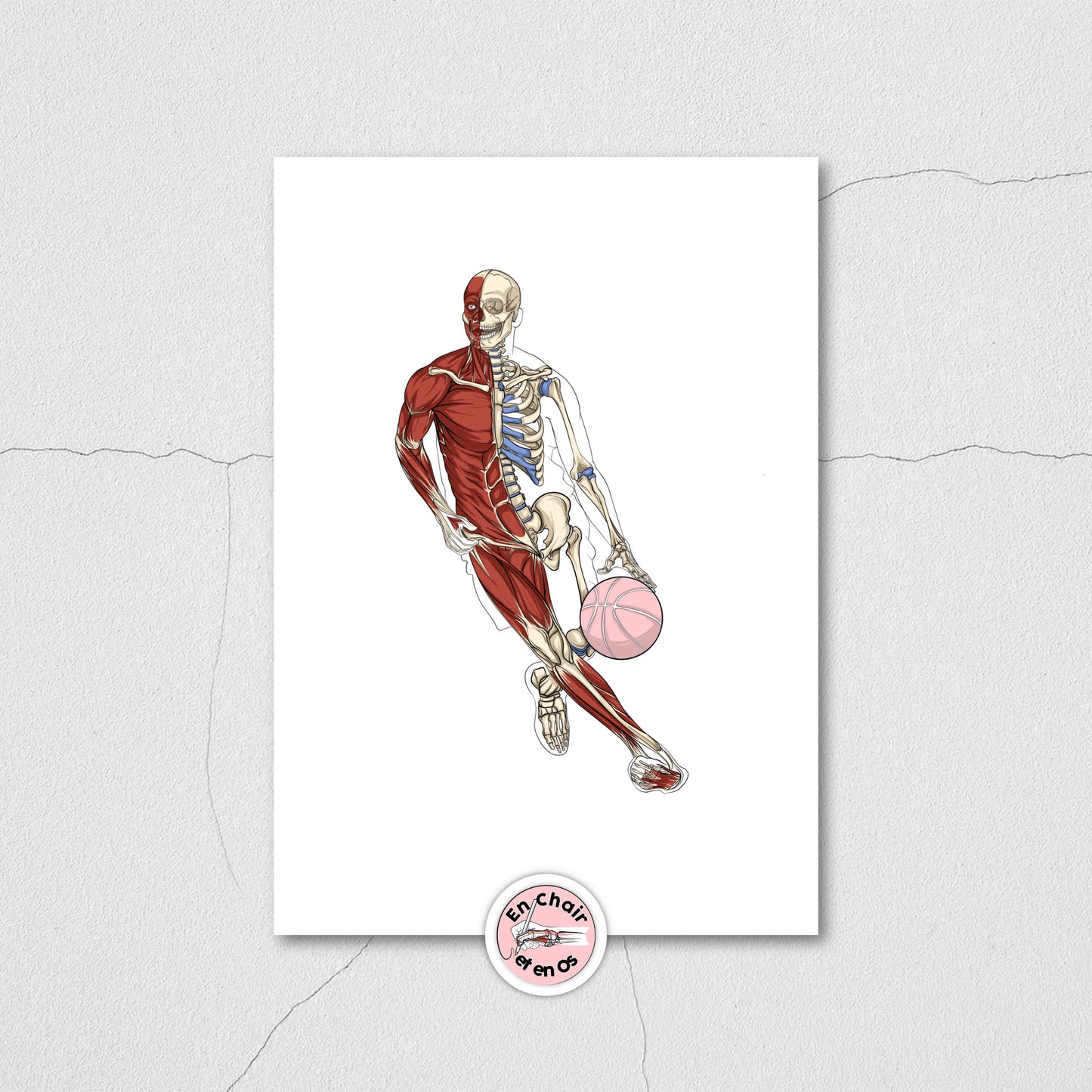
By displaying this type of anatomical chart in your medical office, you show that you are an expert in pathologies related to basketball. This can attract not only amateur athletes but also high-level athletes in search of specific care. Your space thus becomes a point of reference for those who practice this sport, consolidating your reputation as a specialist in sports medicine.
Differentiating yourself as a specialist in high-level sports
In an increasingly competitive market, it is essential to differentiate yourself as a healthcare professional. By displaying anatomical charts like the Sprinter Anatomical Chart, you affirm your expertise in the pathologies of high-level athletes. This anatomical poster details the muscles and joints used during a sprint, an exercise requiring great muscular power.
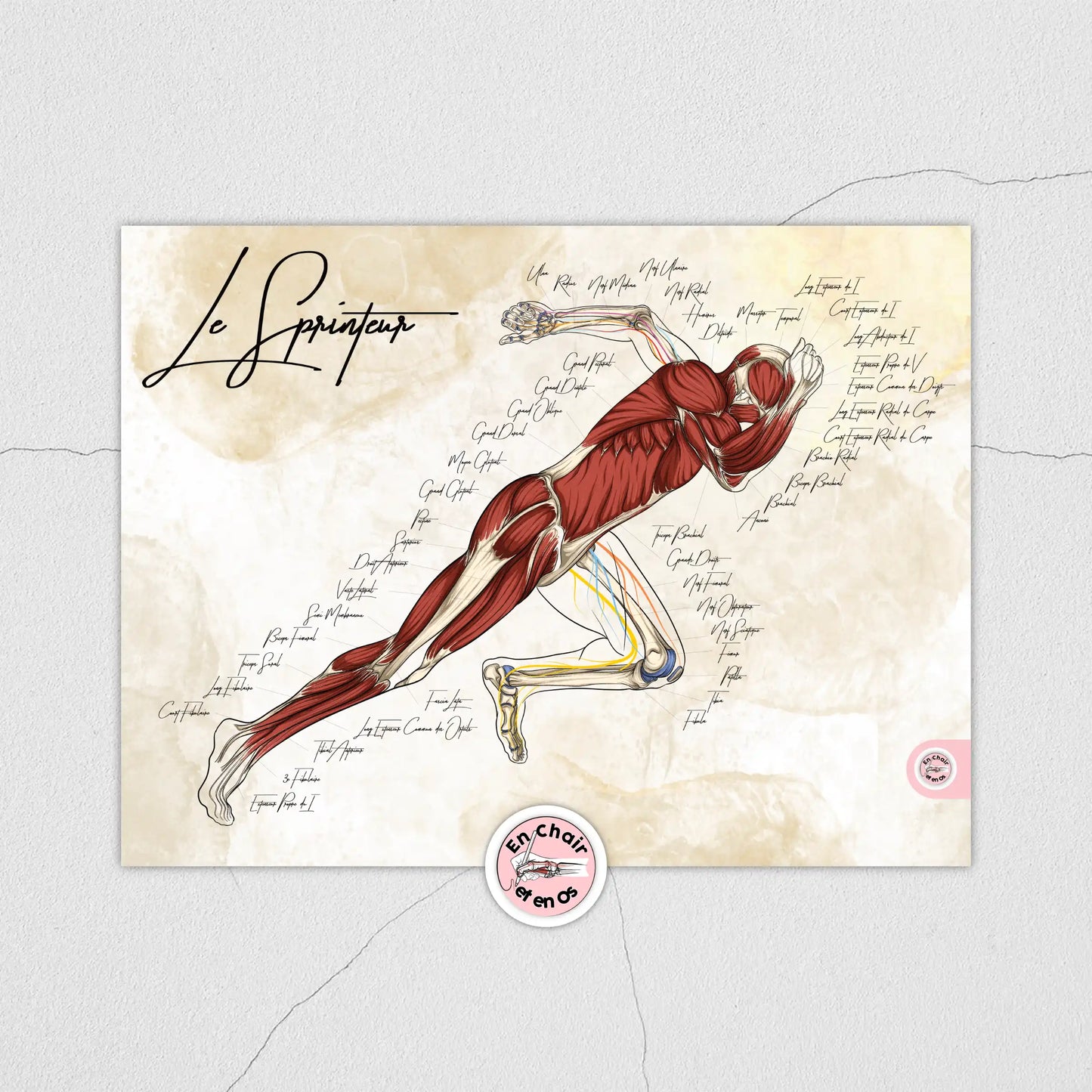
Using this type of anatomy chart in your medical office is not just a matter of aesthetics; it is a statement of your ability to treat complex pathologies specific to athletes. It attracts a demanding clientele looking for personalized care adapted to their athletic activity. Thanks to this complete equipment, your space becomes a benchmark in sports medicine, valuing your competence and strengthening your position in the market.
Conclusion
In conclusion, integrating these types of sports-dedicated anatomical charts into your medical practice is much more than a simple aesthetic improvement. It is a strategic choice that can transform your workspace into a place that is both welcoming and professional. Each poster plays a key role in educating your patients about their own skeleton and human anatomy, as well as in asserting your expertise. By choosing models adapted to your specialty on En Chair et En Os, you provide an environment conducive to healing, while strengthening the perception of quality and know-how that builds your reputation.