
Author: Naël El Kastani
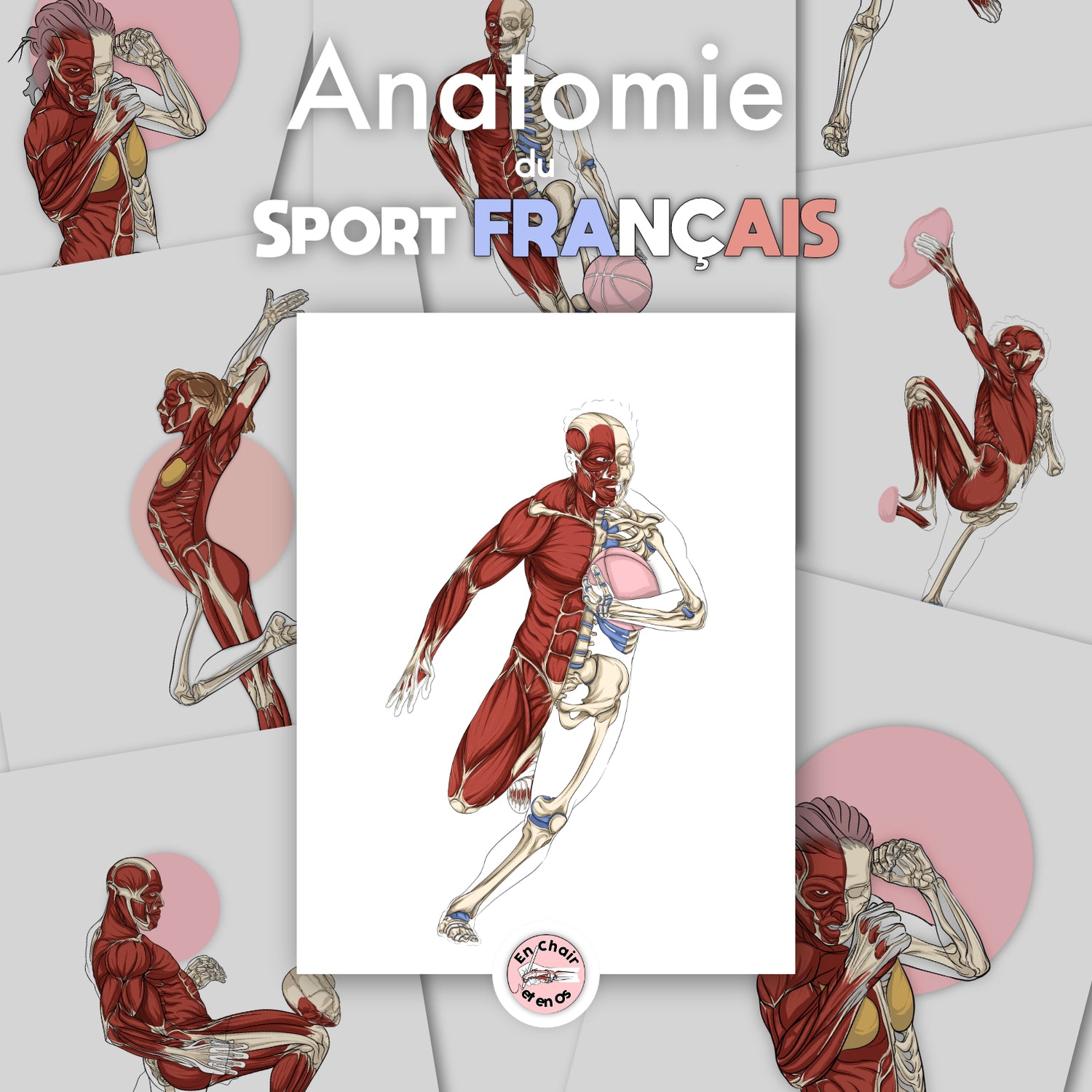
As healthcare professionals, explaining human anatomy to patients through drawings can sometimes be a complex task. The way you convey this information is essential in helping your patients better understand their bodies, pathologies, or proposed treatments. Using these illustrations in your medical office is an effective method for making human anatomy more accessible and understandable.
The importance of anatomical drawings for explaining anatomy
Making anatomy accessible through drawings
These illustrations allow for the representation of the human body in a simple, detailed, and educational way. Thanks to these visual representations, patients can visualize complex structures, such as bones, muscles, and joints. Anatomy drawings are particularly effective for illustrating complex concepts visually. For example, the Human Skeleton Chart, available online on our site En Chair et en Os, helps illustrate the complete skeletal structure in an educational manner. This chart represents the human skeleton as a whole, allowing patients to better understand the position of bones, their function, and their role in supporting the body. These illustrations help in understanding human body proportions, posture, the line of the limbs, as well as joint connections, thereby facilitating the learning of anatomy.

By using these illustrations, you enable your patients to learn how to identify key bony areas and understand how bones articulate with each other. Furthermore, these representations help explain bone pathologies, fractures, or skeletal deformities, thus offering a clear visual approach to illustrate medical explanations.
Promoting memorization and understanding
Anatomy drawings contribute significantly to better memorization of medical information. Graphic representation makes it possible to show proportions, angles, and movements of the human body, allowing your patients to learn and integrate explanations more easily. Notably, the Human Musculature Chart is an excellent visual aid for grasping different muscle groups and their functions. By showing muscles in detail, this chart helps patients identify the muscles used during body movements, such as flexion or extension.

These illustrations make it possible to explain the mechanisms of muscle injuries, contractures, or tension. Additionally, by showing the layout of the muscles, you help your patients better grasp the muscle-strengthening or stretching exercises that you propose during rehabilitation. Using these illustrations makes anatomy more tangible and allows patients to concretely visualize what they are feeling in their bodies.
Techniques for using anatomical drawings in consultation
Adapting the drawing to the medical context
To use these illustrations effectively, it is essential to select them based on the pathology or the desired explanation. When addressing upper limb pain, for instance, the Upper Limb Muscle Chains Chart is particularly useful. It allows for visualizing the interconnected muscles of the arm and shoulder, thereby facilitating the explanation of muscle pain or chronic tension.
By showing muscular continuity, these illustrations help explain how wrist pain can sometimes originate from tension in the shoulder. This holistic approach is essential for allowing patients to grasp the interconnections of muscle chains. Adapting the illustration to the medical situation allows you to offer a more personalized explanation and strengthen the patient's involvement in their own care.
Using drawings to explain movements and postures
Patients suffering from lower back pain or postural disorders benefit greatly from a visual explanation. The Trunk Muscle Chains Chart is ideal for illustrating upper body movements and for explaining the movements that need correction. Showing these muscle chains makes it possible to perceive the impact of poor posture on back or neck pain.
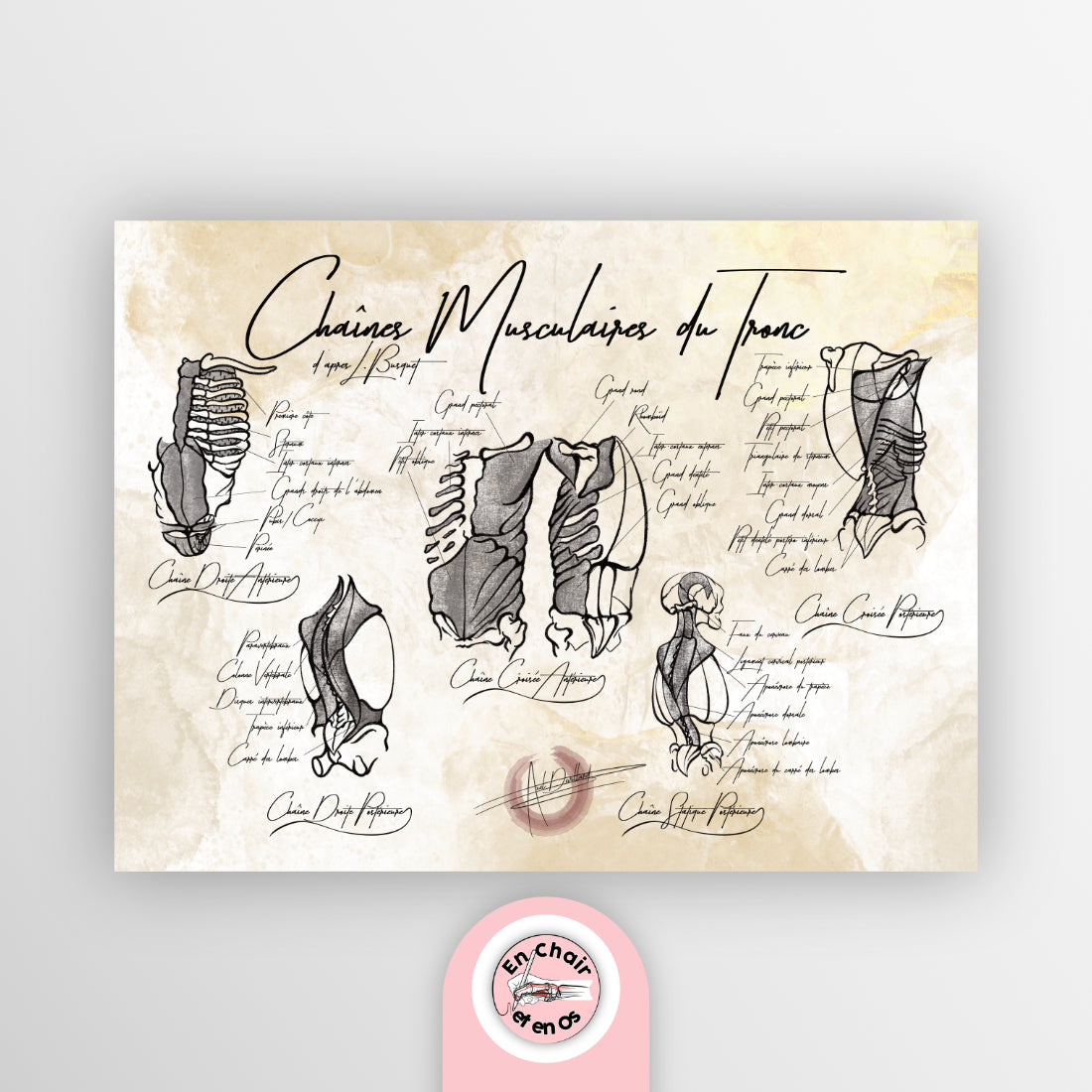
By making use of these illustrations, you can demonstrate to patients how inappropriate movements excessively strain certain muscle groups. This visualization allows them to become aware of the adjustments to make in their daily lives to preserve their spine and trunk musculature.
Concrete examples of using drawings
Using drawings to support rehabilitation
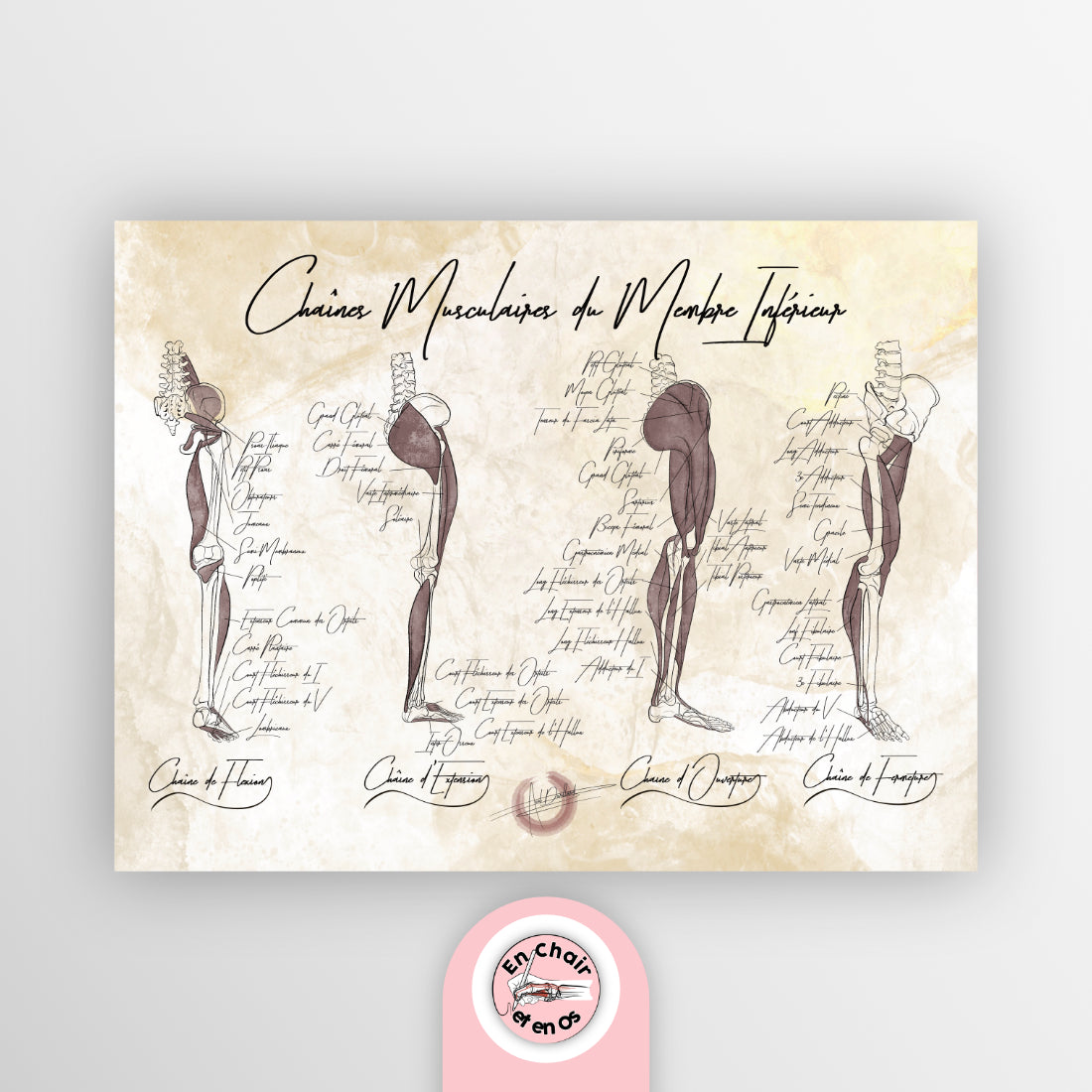
For patients in lower limb rehabilitation, the Lower Limb Muscle Chains Chart allows for visualizing the muscles engaged during strengthening or stretching exercises. These illustrations support patients in the proper execution of movements, while explaining pain linked to poor posture or muscle imbalance.
In rehabilitation, it is essential to illustrate the specific actions of the legs and feet. For example, during a quadriceps or hamstring strengthening exercise, the illustration shows how these muscle groups interact to stabilize the joints. These visual representations also help highlight points of tension and assist the patient in correcting their posture or movement.
Anatomy applied to sports activities
Athletes, especially tennis players, are often confronted with muscle injuries due to repetitive movements. The Tennis Player Chart - Roger Federer is an excellent example for explaining muscle tension in certain postures. By observing this chart, patients can better grasp why certain techniques lead to pain or injury, and thus adjust their movements to avoid muscle tension.
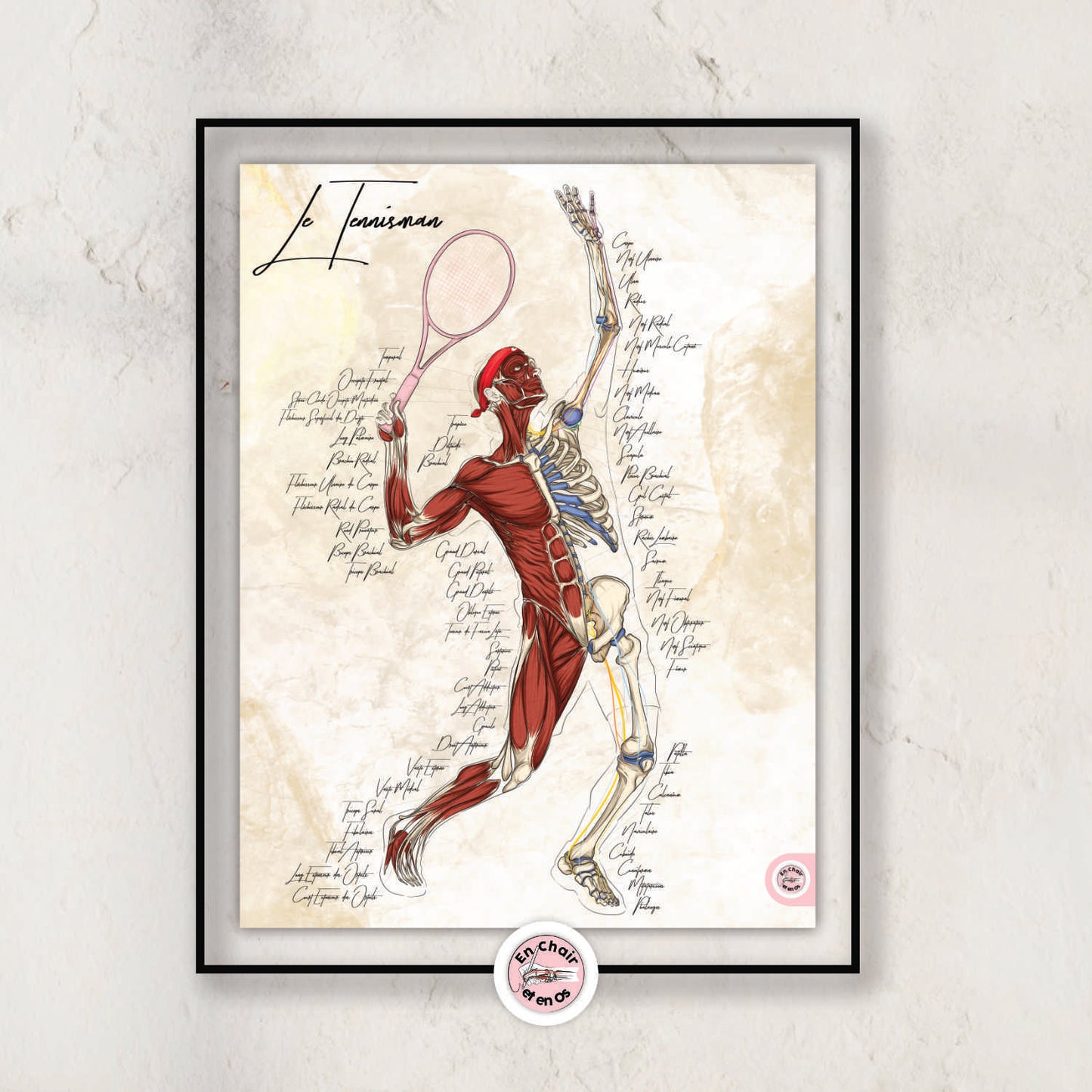
Tennis technical movements, such as rapid rotations and repeated impacts, intensely strain certain muscle fibers. By studying these illustrations, it becomes easier to raise patient awareness about the importance of physical preparation and a proper warm-up to prevent injuries.
Conclusion
Integrating these illustrations into your consultations is an innovative and effective way to strengthen your patients' understanding. By using appropriate visual aids, you make anatomy more accessible and promote lasting learning. To enrich your consultations, use these resources available on our site En Chair et en Os, which offers a complete collection of high-quality charts. Learning human anatomy through drawing is a practical and educational approach. As a practitioner, you thus have a valuable tool for conveying your knowledge in a simple and engaging way.